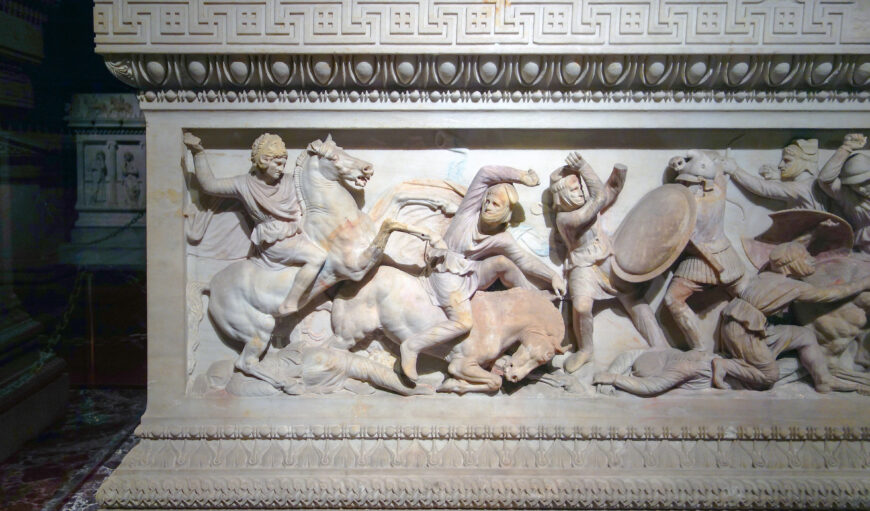


The short and violent life of the Macedonian king Alexander the Great offers a useful case study in war’s repercussions for cultural heritage. As he fought his way through the Persian Empire in the late 4th century B.C.E., Alexander the Great famously destroyed monuments, such as the palace of Persepolis, an important political and administrative center in present-day Iran. At the same time, his conquest of the rich and powerful ancient kingdom of the Achaemenids also encouraged the creation of new works of art, for example, portraits of Alexander by the celebrated artists Lysippos and Apelles. And in his later years, Alexander became an increasingly significant rebuilder of monuments like the ziggurat of Babylon, better known as the Biblical Tower of Babel.