
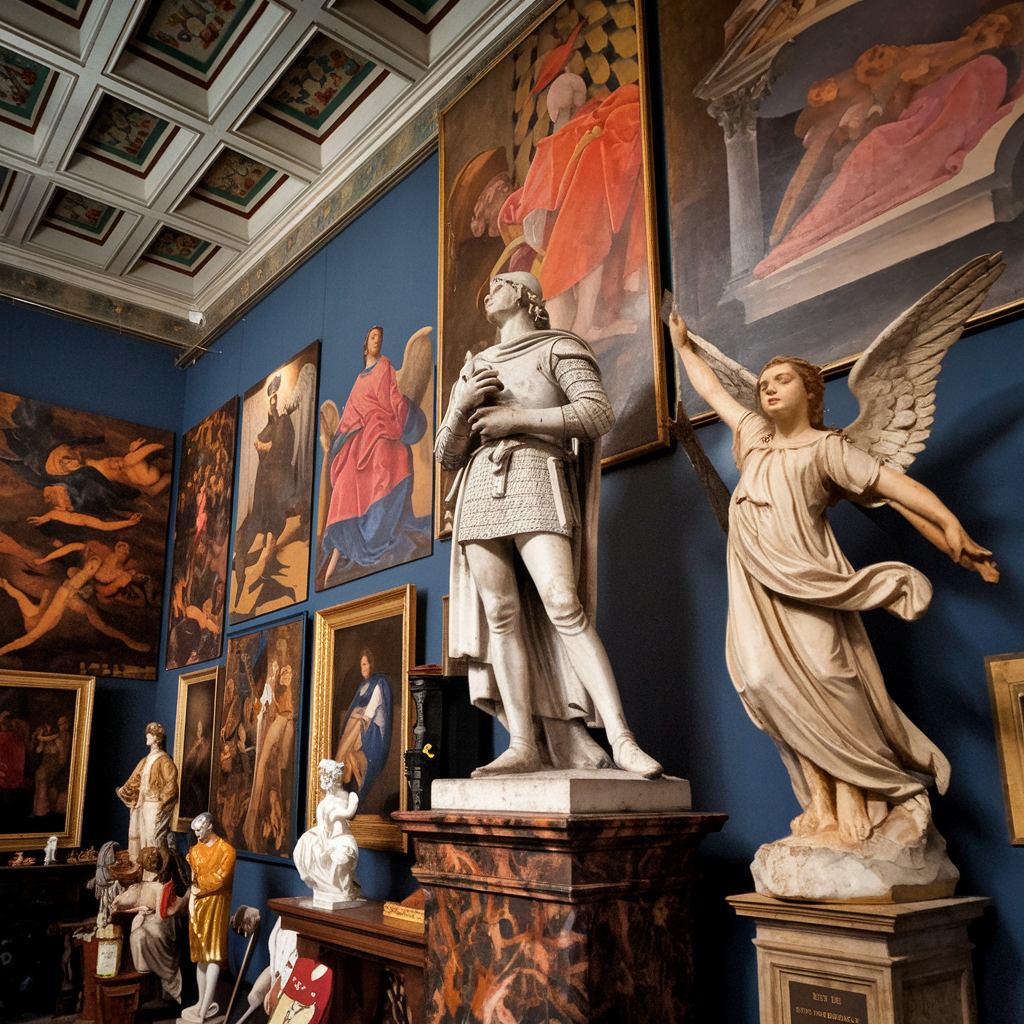
When it comes to art, some institutions are not just museums, but true sanctuaries of the world's cultural heritage
. From the splendor of the Louvre to the solemnity of the Peggy Guggenheim
Collection, each of these places tells a unique story, a living testimony to our
artistic heritage. A journey that takes us on a discovery of the most prestigious and
influential art collections on the planet, exploring their history, the masterpieces they house, and the impact they
generate, both economically and culturally.
Louvre Museum, Paris
At the top of the list of the most important collections is undoubtedly that of the Louvre Museum in Paris, the most visited museum in the world.
Originally built as a medieval fortress in the 12th century and
converted into a royal residence, the Louvre became a museum in 1793 during the French Revolution
at the behest of Francis I. Today, it houses over 500,000 works, including some of the most famous icons
in art history: from Leonardo da Vinci's Mona Lisa to the Venus de Milo and the Winged Victory of
Samothrace. Its collections range from Egyptian antiquities to Islamic art, through the Renaissance and modern art, divided into eight curatorial departments. With approximately 8-10 million visitors each year, the Louvre is a key driver of cultural tourism in Paris.
Vatican Museums, Vatican City
Founded in the 16th century by the popes to preserve the extraordinary art collection of the Catholic Church
, the Vatican Museums are built around the Sistine Chapel, where Michelangelo's frescoes
attract millions of visitors every year. The collection, which includes works by Raphael,
Caravaggio, and the Laocoön, a masterpiece of ancient sculpture, spans 54 museums and over
70,000 works. The Sistine Chapel, with Michelangelo's Last Judgment, is the beating heart of the Museums, but there is no shortage of modern works by artists such as Van Gogh, De Chirico, and Fontana. With more than 6 million visitors per year, the Vatican Museums are one of the main sources of income for Vatican City, with a 33.1% increase in 2023 compared to the previous year.
The British Museum, London
Founded in 1759, the British Museum is the world's first national public museum and one of the largest and most prestigious. Its historical and archaeological collection comes mainly from British explorations and conquests, including masterpieces such as the Rosetta Stone and the Parthenon Marbles.
With more than 7 million objects, its exhibitions range from ancient Egypt to
Mesopotamia, passing through the Roman Empire. With over 6 million visitors per year, the British
Museum recorded a 42% increase in 2023 compared to 2022, confirming its
centrality in the global cultural landscape.
The Hermitage Museum, Saint Petersburg
Commissioned by Catherine the Great in 1764, the Hermitage is one of the largest and oldest museums in the world,
housed in the magnificent Winter Palace in Saint Petersburg. With over 3 million pieces, the
collection includes works by Rembrandt, Michelangelo, Rubens, and Matisse, and is famous for its
vast selection of European and Oriental art. Each year, the Hermitage welcomes around 4 million visitors, with a 16% increase in 2023 compared to the previous year, confirming its status as a pillar of Russian cultural tourism.- The Met, New York
Founded in 1872, the Metropolitan Museum of Art is the largest museum in the United States and one of the most prestigious
in the world. Its collection, which covers a wide temporal and geographical spectrum,
includes masterpieces ranging from ancient Greek and Roman art to works by Van Gogh, Monet, and
Picasso. The Temple of Dendur is one of the most iconic pieces in the Met, which welcomes over 7
million visitors annually, contributing significantly to New York's economy, especially
during prestigious events such as the Met Gala. In 2023, the museum recorded an extraordinary
67% increase over the previous year. - Museo Nacional del Prado, Madrid
Opened in 1819, the Prado Museum was originally created as a royal gallery to house the Spanish monarchy's art collection
. Famous for its masterpieces by Velázquez, Goya, and El Greco, the Prado
houses around 35,000 works. Velázquez's Las Meninas is one of the most famous and visited pieces. With over
3 million visitors a year, the Prado is one of Madrid's main attractions, with a
35% increase in 2023 compared to the previous year.
Uffizi Galleries, Florence
The Uffizi Galleries, founded in the 16th century by the Medici family, are one of the oldest and most prestigious museums
in the world. Their collection includes Renaissance works such as Botticelli's
Birth of Venus and masterpieces by Leonardo, Michelangelo, and Raphael. In addition to the museum,
the complex also includes the Pitti Palace, the Vasari Corridor, and the Boboli Gardens, with a total
of over 150,000 works. Every year, the Uffizi Galleries welcome over 2 million visitors, helping to consolidate Florence as one of the world's art capitals, with a 26% increase in 2023 compared to 2022.- Peggy Guggenheim Collection, Venice
Small but extremely influential, the Peggy Guggenheim Collection, open to the public since 1951,
is one of the most significant collections of modern and
contemporary art. Located in Palazzo Venier dei Leoni, along Venice's Grand Canal, the collection
includes works by artists such as Pollock, Picasso, Dalí, and Kandinsky. With around 400,000 visitors
per year, the museum is a must-see for anyone visiting Venice who loves 20th-century art
.
Conclusions
The art institutions described here are not only custodians of priceless treasures, but also true
economic and cultural drivers. Every year, they attract millions of visitors, generating significant revenue and
contributing to the spread of artistic culture around the world. In this context, platforms such as
Artistinct are committed to promoting art, emphasizing the importance of protecting and
enhancing this heritage that continues to inspire and fascinate generations of enthusiasts.

Join in!
Comments