Our cities tell stories, but many of them have long gone unheard, submerged by decay, neglect, or urban development that has forgotten people. In recent decades, however, something has changed: art has taken to the streets, not only to decorate, but to build connections. Artistic urban regeneration has emerged, a process that uses art as a lever to transform areas, not only from an aesthetic point of view, but above all from a social, cultural, and political perspective.
But what does this mean in practical terms? It is not just about murals or decorative installations, but participatory projects in which artists, citizens, institutions, and communities work together to redefine the identity of a space. In this context, art becomes a tool for listening and co-designing, creating places of memory and belonging.
Artist and citizen, together
Behind every successful intervention lies not only the creativity of the artist, but above all the active involvement of those who live in those places on a daily basis. In participatory workshops, artist residencies, and neighborhood festivals, art intertwines with personal stories, building a sense of belonging and active citizenship.
From schoolchildren to elderly residents, everyone becomes a co-author in a process that goes beyond aesthetic intervention. The result is relational art, capable of restoring dignity to forgotten spaces.
Neighborhoods in transformation: when art changes the social landscape
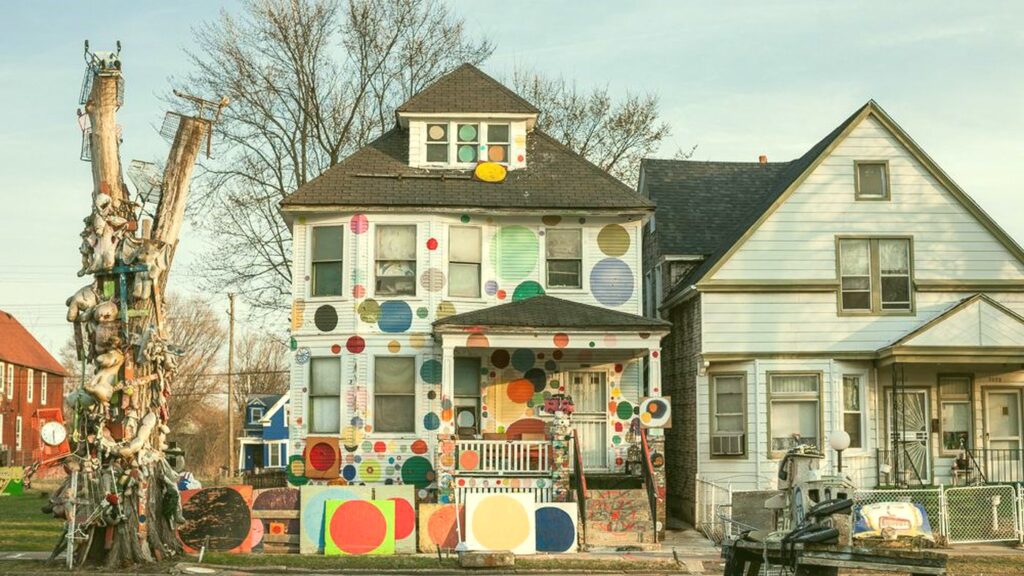
A symbolic example is the Heidelberg Project in Detroit, founded by African American artist Tyree Guyton, who has been working for decades to transform his childhood neighborhood. Guyton has converted dilapidated houses into colorful and provocative installations, using recycled objects, shoes, watches, and stuffed animals. It is a living, ever-changing work, built together with residents to denounce degradation but also to reaffirm the identity of the local African American community.
Another emblematic case is that of Wynwood Walls in Miami. Launched in 2009 on the initiative of entrepreneur and collector Tony Goldman, the project transformed a former industrial and warehouse district, which had been degraded and semi-abandoned for years, into a veritable open-air art gallery. Anonymous walls, shutters, and warehouses have been painted by some of the most famous international street artists, from Shepard Fairey to Os Gemeos, from Swoon to ROA, making the neighborhood a global attraction.
The initial transformation had a strong positive impact: it attracted tourism, investment, cultural activities, and put the spotlight on an area that had previously been ignored. However, this success also marked the beginning of a gradual gentrification process. Rental prices rose, small shops and historic stores were replaced by luxury boutiques and trendy venues, and many residents, mostly from Hispanic communities, were forced to leave.
The aesthetic potential of post-industrialism
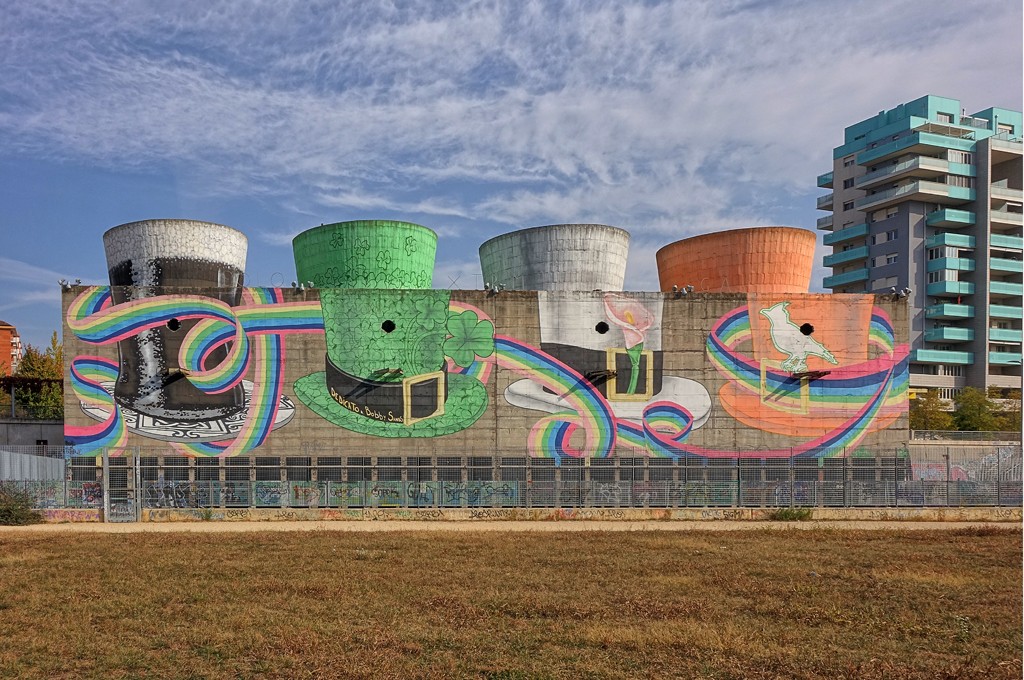
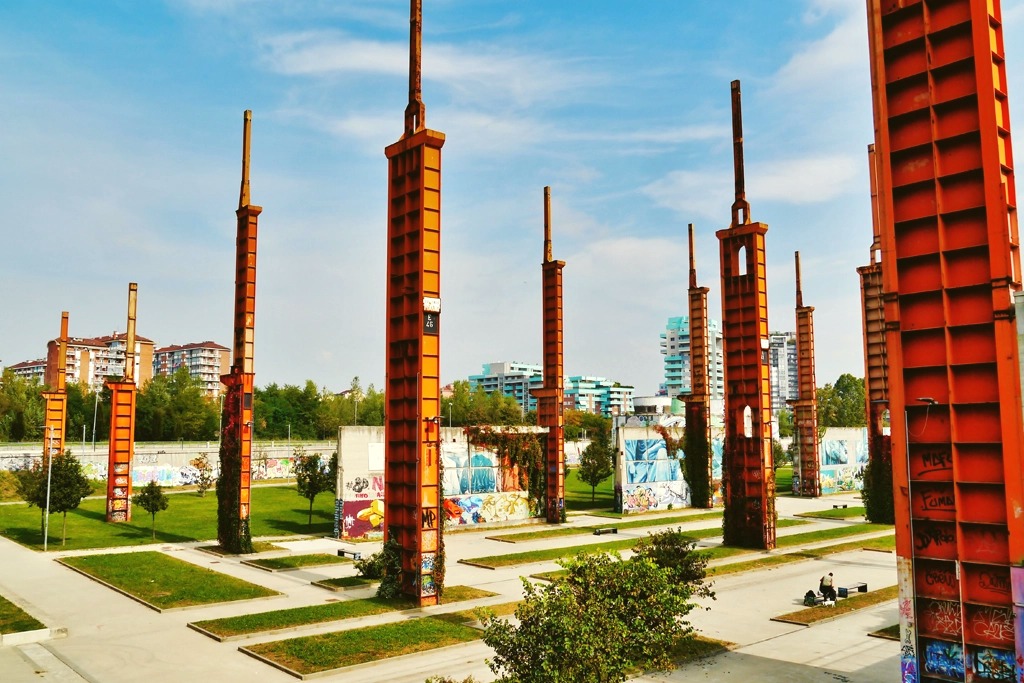
In Italy, too, art is rewriting the face of abandoned places. A significant example is Parco Dora in Turin, built on an area of over 45 hectares once occupied by large industrial plants such as Fiat and Michelin, which marked the city's working-class history.
Here, urban regeneration has not erased the past: the tall chimneys, steel beams, cranes, and factory canopies have been preserved and integrated into the new landscape. Some structures have been transformed into event venues, while others serve as backdrops for street art, such as the giant murals that interact with the industrial architecture.
The park is divided into themed areas: there is a green area with trees and lawns for relaxation and picnics, a covered central square that hosts cultural events and concerts, bike paths, skateboard ramps, and even an urban amphitheater.
Looking further afield, projects such as the Olympic Sculpture Park in Seattle, created by the Seattle Art Museum, show how artistic regeneration can blend with the natural environment and urban life. The park is located on a former industrial site along Elliott Bay, and is now a free public space, open and accessible to all. Along a zigzagging pedestrian path that descends towards the sea, visitors encounter monumental works by contemporary artists such as Alexander Calder, Richard Serra, and Louise Bourgeois, immersed in lawns, native plants, and installations overlooking the ocean. The project integrates art, landscape architecture, and sustainability, also including educational programs, outdoor events, and opportunities for collective enjoyment.
In Madrid, the CaixaForum, designed by architects Herzog & de Meuron, is a brilliant example of urban redevelopment. Converted from a former early 20th-century power station, the building retains its original brick structure, suspended above the ground by a system of supports that accentuates its visual lightness. Next to the entrance is an iconic 24-meter-high vertical garden, one of the first installed in Europe, with over 15,000 plants. Inside, the CaixaForum hosts temporary exhibitions of art, photography, design, and science, as well as workshops for children, conferences, screenings, and meetings. It is not a traditional museum, but a dynamic cultural space designed to engage different audiences.
Avoiding gentrification to build relationships
Every artistic regeneration project has two sides: on the one hand, its transformative potential; on the other, the risk of exclusion. When interventions are imposed "from above," without real involvement, they can fuel gentrification, increase the cost of living, and distort the identity of neighborhoods.
This is why co-design is now one of the fundamental keys: the best results come from processes in which artists engage in dialogue with schools, associations, administrations, and citizens. The goal is not simply to beautify, but to generate paths in which the place is recognized, cared for, and experienced collectively.
Cities as living organisms
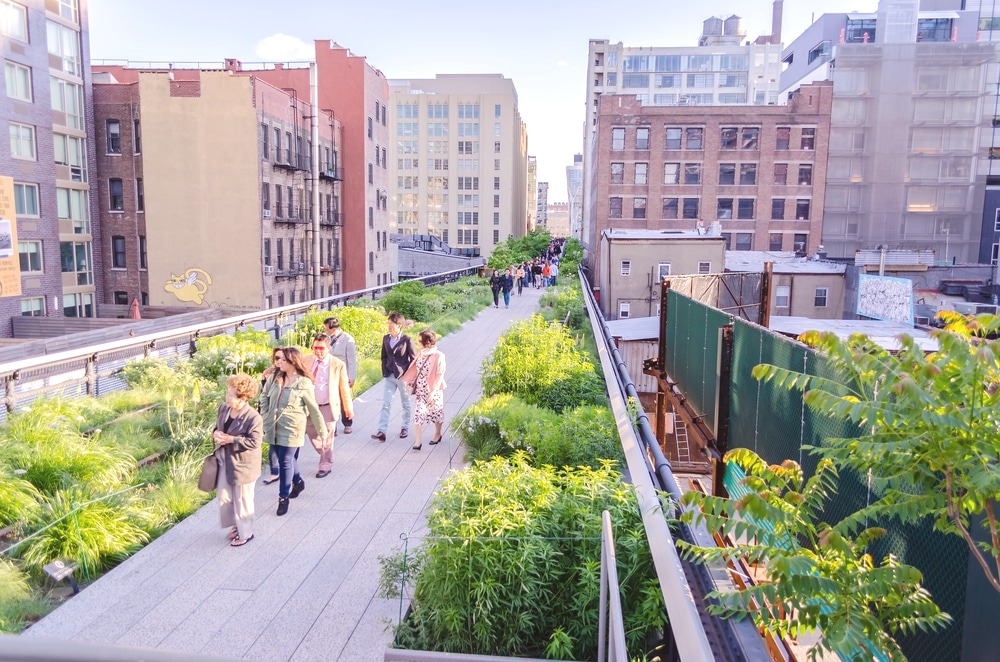
When art is shared and rooted in local communities, it ceases to be a luxury for the few and becomes a common right. This is the profound meaning behind projects such as New York's High Line: a former elevated railway line from the 1930s, abandoned for decades and then transformed into a linear park stretching over two kilometers in the heart of Manhattan.
Today, the High Line is a public space suspended between buildings, accessible on foot, where nature blends with architecture, design, and contemporary art. Along the route, there are more than 500 species of plants inspired by the spontaneous vegetation that grew on the disused tracks, rest areas with wooden seats, viewing platforms, temporary installations by international artists, performances, cultural events, and social engagement projects.
Today, regeneration also means imagining alternative futures. Thinking about new ways of inhabiting urban space means reclaiming the right to dream, to design cities that are people-friendly, not just profit-oriented. And participatory art projects, even in their small gestures, can become real laboratories for this possibility.


Join in!
Comments