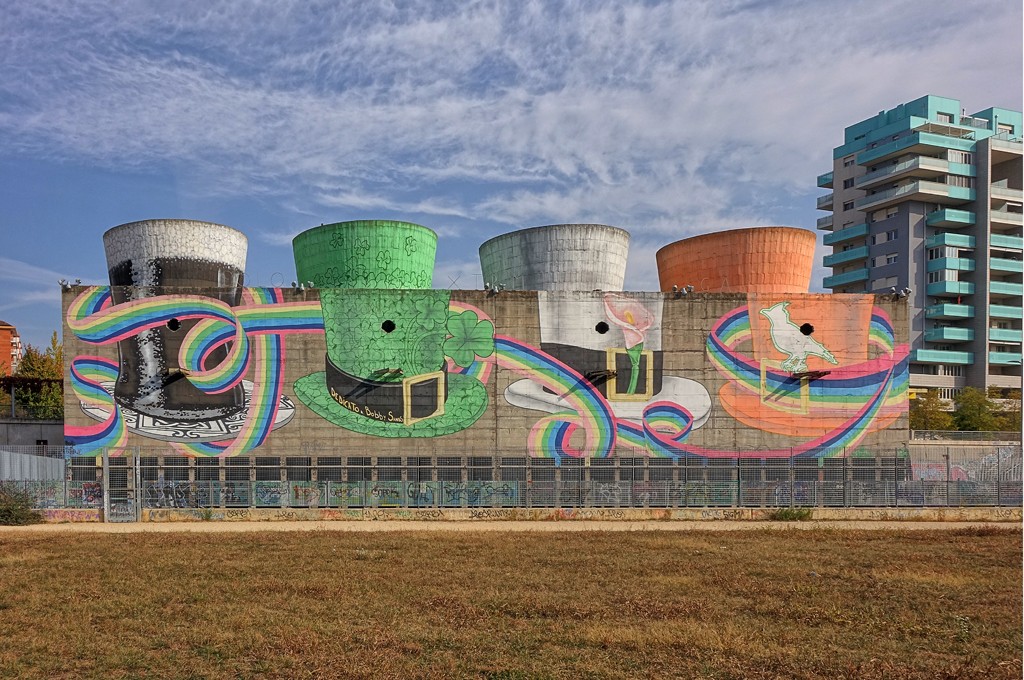
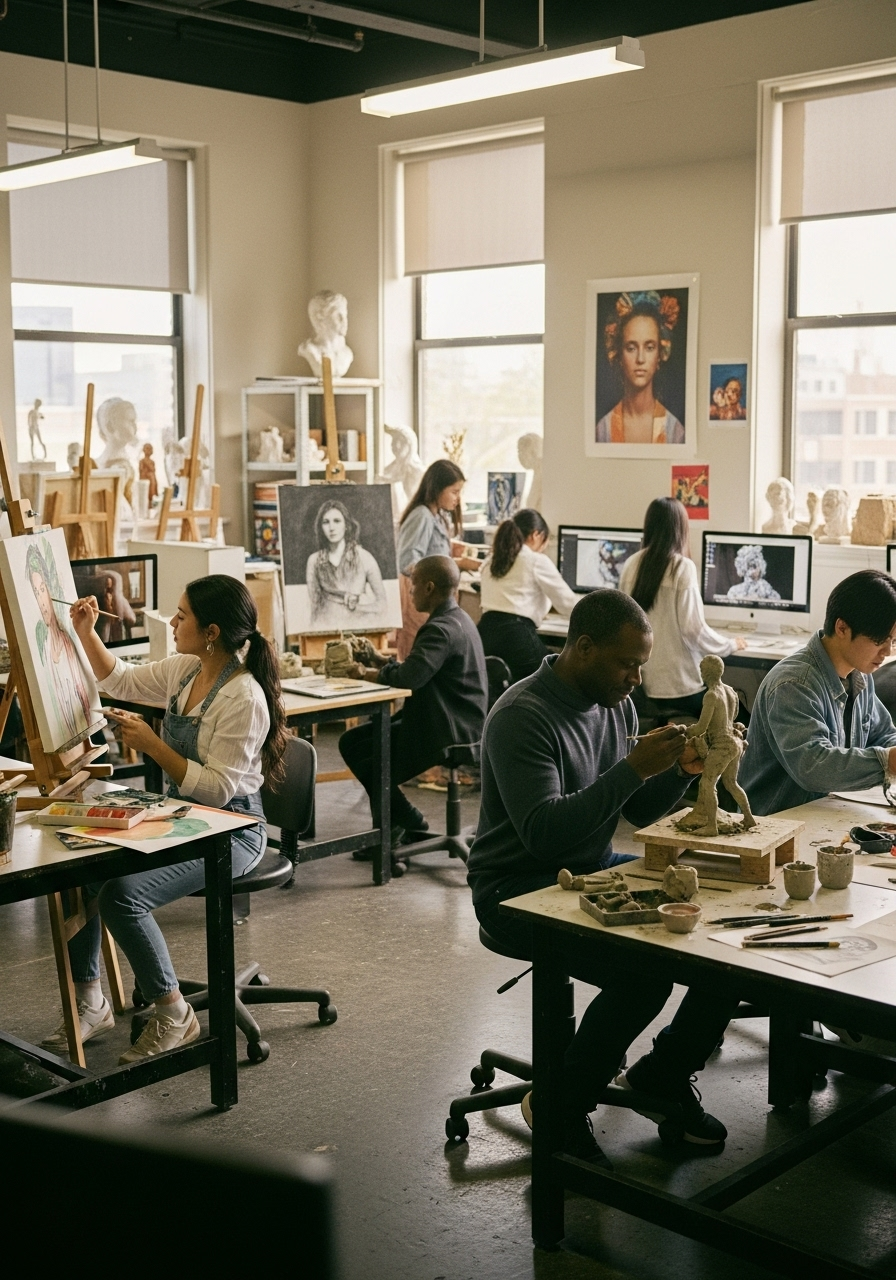
Our cities tell stories, but many of them have long gone unheard, submerged by decay, neglect, or urban development that has forgotten people. In recent decades, however, something has changed: art has taken to the streets, not only to decorate, but to build connections. Artistic urban regeneration has emerged, a process that uses art as a lever to transform areas, not only from an aesthetic point of view, but above all from a social, cultural, and political perspective.
At the heart of Artistinct, an artistic ecosystem designed to redefine the interaction between art and technology, the Social macro-area represents the true beating heart of community life on Artistinct: a dynamic, multidisciplinary tool, open to encounters between artists, curators, designers, photographers, writers, and art lovers: a participatory laboratory where every user can contribute their own vision, their own projects, and their own creative identity.
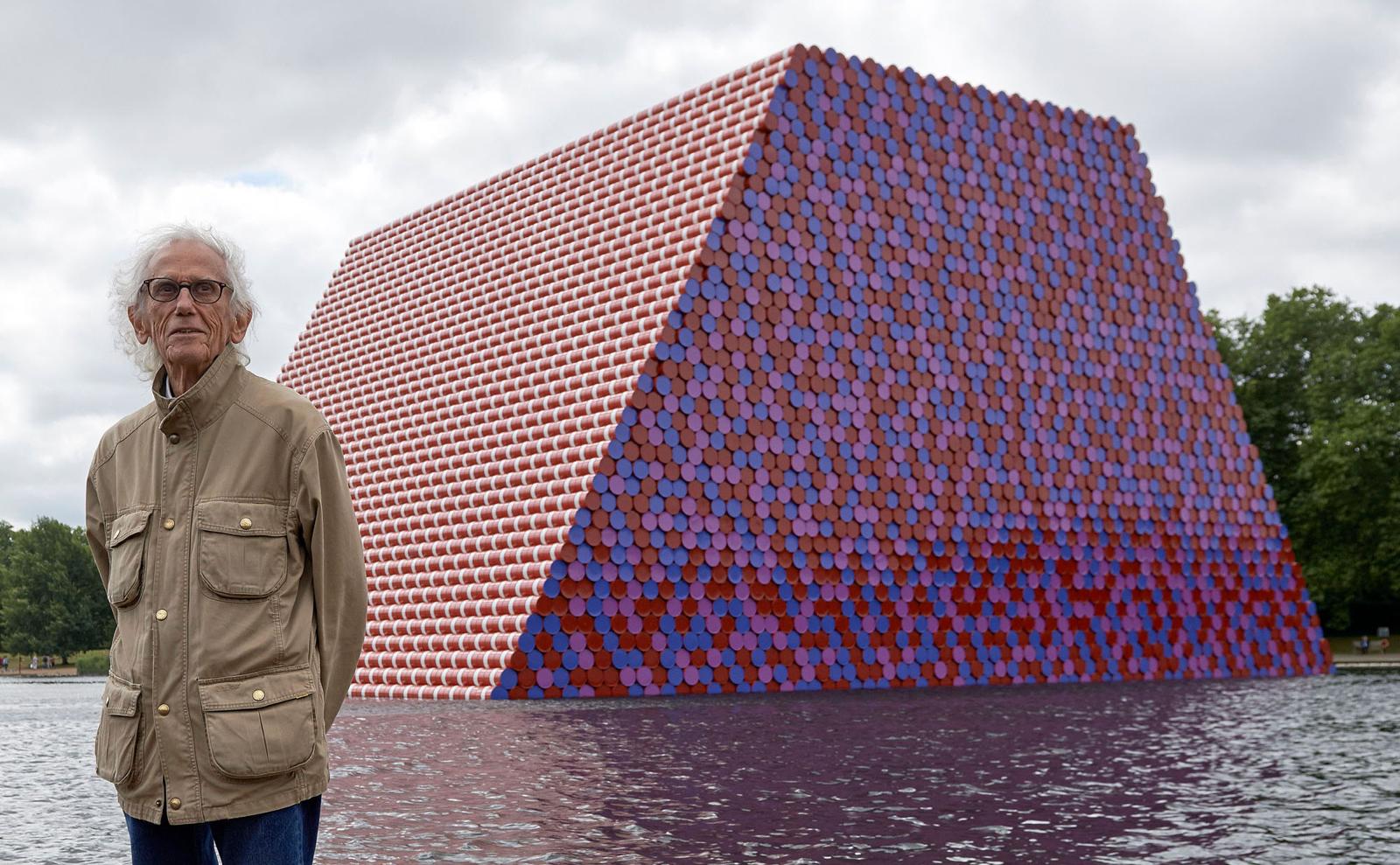
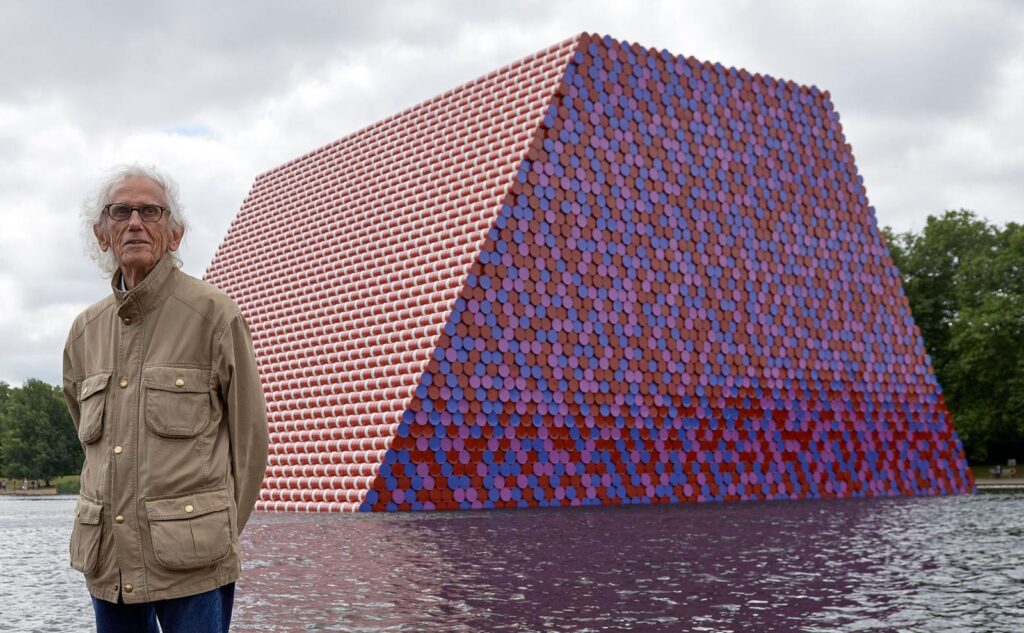
Christo Vladimirov Javacheff, known as Christo, was one of the most recognizable artists of the 20th and 21st centuries for his radical approach to environmental art. Born in 1935 in Gabrovo, Bulgaria, Christo left an indelible mark on the world of contemporary art despite the fact that his works were temporary in nature, designed to exist only for a limited time and then disappear without leaving any material trace.
From Bulgaria to Paris, then to New York
Christo's life has been marked by escape and movement from the very beginning. After studying at the Academy of Fine Arts in Sofia under a communist regime, he managed to flee to the West in 1957, settling first in Vienna, then Geneva, and finally Paris. It was in the French capital that he met Jeanne-Claude Denat de Guillebon, an artist with whom he would share his entire personal and professional life. The two began collaborating in the 1960s, although Jeanne-Claude would only be officially recognized as co-author in the 1990s.
An ephemeral yet monumental art form
Christo's works are distinguished by one fundamental characteristic: they are not designed tolast. The artistic interventions he has created, often together with Jeanne-Claude, are large-scale, site-specific, temporary installations involving buildings, natural landscapes, and urban infrastructure. These are complex projects that require years of preparation, permits, negotiations with authorities, and technical and financial support. But in the end, their physical existence lasts only a few days or weeks.
One of the unique features of the couple's work is that their projects were never financed withpublic funds or sponsorships: the entire cost was covered by the sale of sketches, preparatory drawings, and other original works. This model guaranteed them complete creative and managerial autonomy, a crucial element in their artistic vision.
Major projects
Among Christo and Jeanne-Claude's most famous works are installations that have involved some of the world's most iconic architecture and landscapes. The Wrapped Reichstag (1995) in Berlin, where the German Parliament was wrapped in 100,000 square meters of silver fabric, is considered one of their most powerful works, both symbolically and visually. The project required 24 years of negotiations before authorization was granted.
Other significant interventions include:
• The Pont Neuf Wrapped (1985), in Paris, where the oldest bridge over the Seine was covered with sand-colored fabric.
• The Umbrellas (1991), with 3,100 large umbrellas installed simultaneously in California and Japan.
• The Gates (2005), in Central Park, New York, consisting of over 7,000 orange structures that followed the paths of the park.
• Floating Piers (2016), on Lake Iseo in Italy, a floating bridge accessible on foot that connected the mainland to the island of Monte Isola. In 16 days, the work was crossed by over 1 million people.
The meaning of temporary art
The value of Christo's works lies not in the artistic object itself, but in the process, in the temporary transformation of a public space and in the collective experience it generates. For him, art had to be experienced in the present, without mediation and without the constraint of ownership. Once completed, the work was dismantled and every element recycled or removed, as if to eliminate any temptation to commercialize it. This vision clashes with the logic of the art market, but it is precisely what made Christo's work recognizable and consistent. The artist himself always emphasized that total freedom was the central point of his practice: "There is no hidden meaning. There are no messages. The work is just what you see."
The last work
In 2021, one year after his death (in May 2020), the work L'Arc de Triomphe, Wrapped was posthumously completed in Paris. Conceived in the 1960s, the project saw the famous Parisian monument entirely wrapped in silver-blue fabric, tied with red ropes.
Once again, the project took years of preparation and involved numerous experts. It was Christo's last great vision to take shape, symbolically in the place where it all began.
An intangible legacy
Christo left no permanent collections or museum pieces. His contribution to contemporary art is measured in his ability to engage the public, to rethink urban and natural space, and to assert that a work can have an enormous impact even without leaving physical traces. His career demonstrates that art can be temporary, free, public, and yet remain permanently in the collective memory.
At Artistinct, we admire Christo: we believe he was an innovative artist in his intentions and work, as well as having a great ability to institutionalize himself, collaborating with state bodies and organizations. However, we believe that art is also capable of adapting and linking itself to different market logics, creating a business that fully integrates finance and artistic culture.
In the world of art, learning is never a finished process. Creativity does not arise solely from an inner impulse, but grows through encounters with ideas, languages, and contexts. This awareness is the foundation of LEARN, the training area of the Artistinct platform, designed not only to offer tools, but also to generate a fertile and dynamic cultural ecosystem. A digital space where artists can train, learn, and orient themselves in the contemporary market.
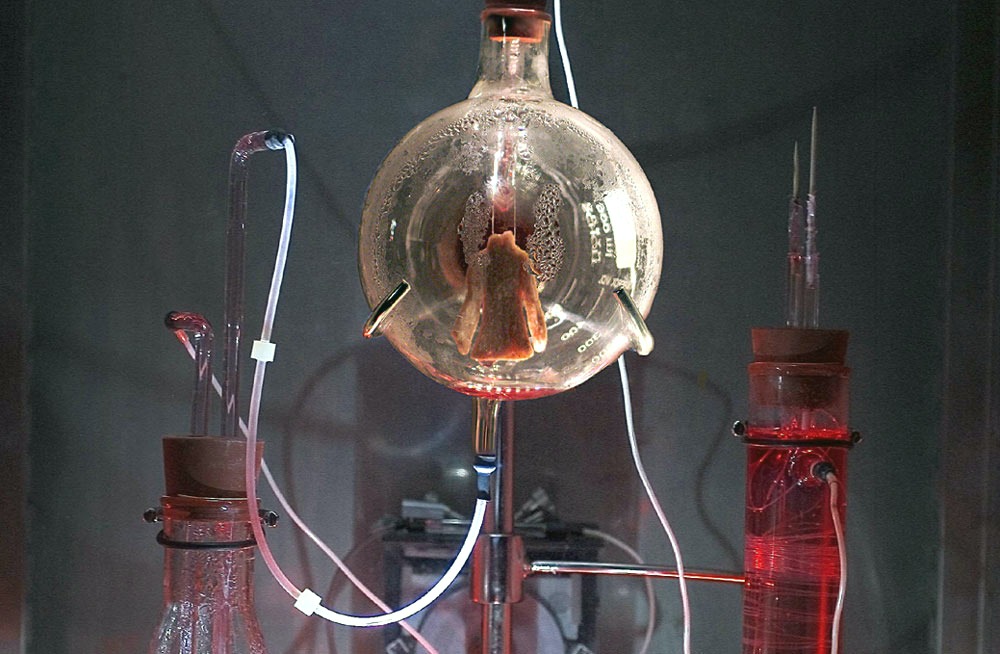
Have you ever thought that science and creativity could intertwine to transform cells, bacteria, and living organisms into true works of art? This is exactly what happens in bioart, a contemporary artistic practice that stems from the fusion of scientific innovation and artistic sensibility. In this fascinating field, artists abandon conventional means of expression to work directly with living matter: tissues, microorganisms, and biological elements in constant transformation.
Those who choose to make a living from art often find themselves walking a fine line: on the one hand, the need to remain faithful to their creative vision, and on the other, the urgency of earning a living. It is an unstable balance, made up of compromises, insecurities, and, too often, loneliness.
But what if there was a space that could offer visibility and real opportunities without asking you to sacrifice the integrity of your path?
Today, creative delegation is often seen as an integral part of the contemporary artistic process .
Curator Claire Bishop speaks of "diffuse authorship" and recognizes that post-Duchampian art challenges the idea of hand and material, proposing more fluid, sometimes corporate, production models .
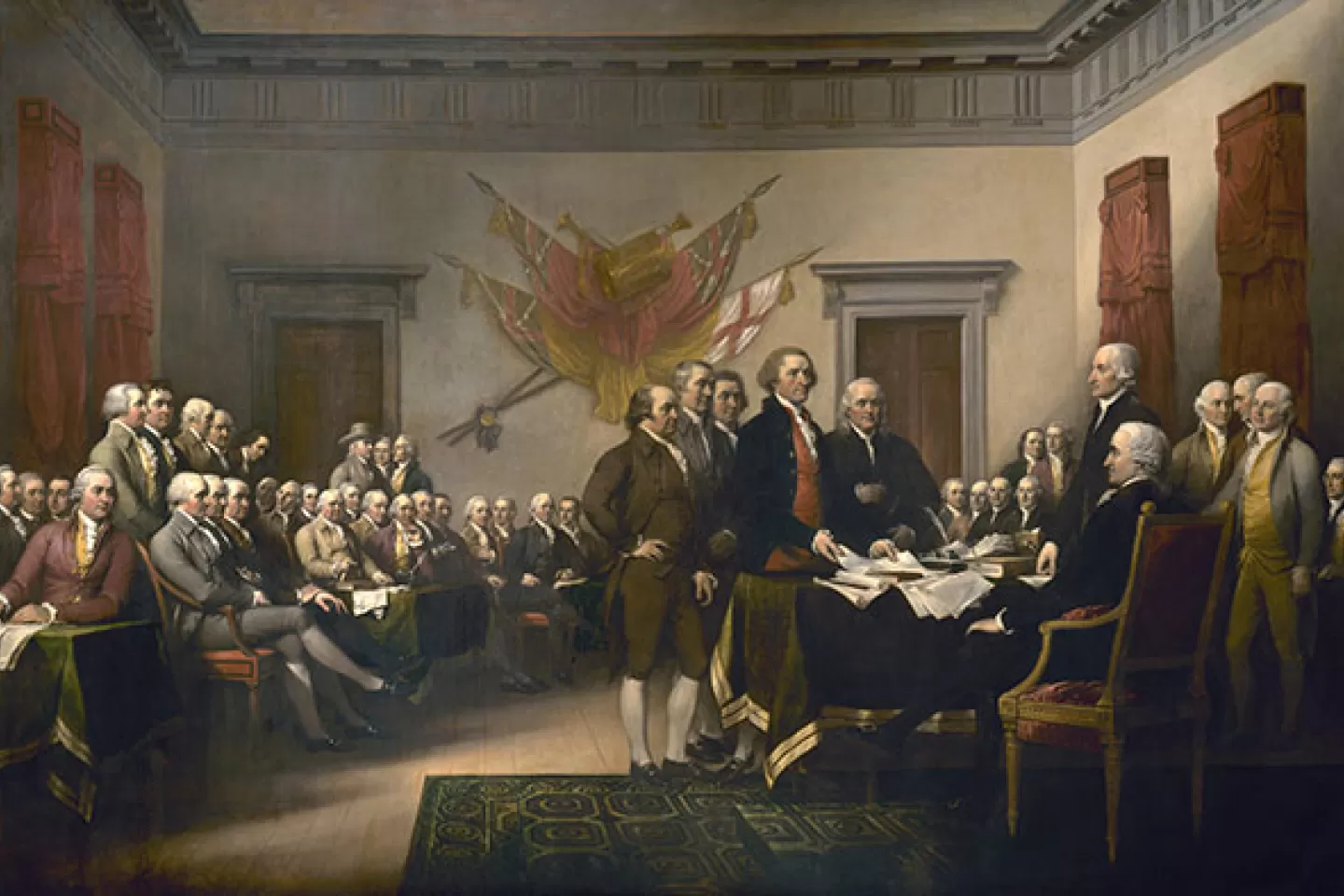
July 4, 1776, was not only the birth of a nation, but the beginning of a search for identity that continues today. As fireworks explode in the American sky, art offers a different lens through which to view America: not that of patriotic parades, but that of unresolved contradictions, broken dreams, and daily battles for freedom. From Emanuel Leutze's Washington Crossing the Delaware to Norman Rockwell's The Problem We All Live With, eight iconic works trace a path from the construction of the national myth to its questioning.
The romantic hero and the birth of the myth In 1851, Emanuel Leutze painted Washington Crossing the Delaware in Düsseldorf, creating the quintessential romantic image of American birth. Washington, standing tall on the boat amid ice and storm, leads his troops across the frozen Delaware River on Christmas Eve 1776, embodying the hero who defies the elements to conquer freedom. The flag visible in the painting is anachronistic, as it was not yet in use on the night of December 25, 1776; it was only officially adopted in June 1777. The anachronistic presence of the flag, together with the theatricality of the scene, reveal the intent of the work: to construct a founding myth for a still young nation. Leutze understands that every country needs its own legendary heroes. His July 4 is that of epic, where history becomes an exemplary tale: America triumphs thanks to its faith and determination, despite every obstacle.
The austere face of the frontier In 1930, Grant Wood responded to Leutze's romanticism with American Gothic. The pitchfork wielded by the man and the stern gazes of the couple in front of their Carpenter Gothic-style house in Iowa do not celebrate rural life, but reveal the harshness of small communities in the Midwest. Wood does not idealize the pastoral dream: he presents it in its stark reality, made up of sacrifice and moral rigidity, becoming a symbol of American resilience during the Great Depression. His Fourth of July is not made up of fanfare, but of silent daily resistance.
The loneliness of the metropolis Edward Hopper, with Nighthawks from 1942, captures the other face of America: urban, modern, but deeply lonely. The work is set in an American city (inspired by New York) during World War II. In the diner lit up at night, four figures are physically close but emotionally distant. The absence of a visible door transforms the space into a glass prison. Hopper captures a fundamental paradox: individual freedom can turn into loneliness and existential alienation. His 4th of July is that of those who celebrate independence only to find themselves terribly alone.
The table of democracy Rockwell's 1943 Freedom from Want shows America coming together around a table. Part of the "Four Freedoms" series, inspired by Franklin D. Roosevelt's 1941 speech, it shows a family gathered around a table set for Thanksgiving. But here too, beneath the idyllic surface, the scars of war are hidden: the presence of only water on the table alludes to the hardships of wartime. Rockwell shows that American independence is built through sharing and collective sacrifice.
The resilience of the soul With his 1948 painting Christina's World, American artist Andrew Wyeth offers the most powerful metaphor for independence. Christina, who suffers from a neuromuscular disease, gazes toward a distant house from an empty field. Her physical limitation becomes inner strength. Wyeth paints an America of people who do not give up, who find a form of resistance in their own fragility.
When the flag becomes a question In 1954-55, Jasper Johns revolutionized the concept of patriotism with Flag. By transforming the flag into an art object, Johns posed a disturbing question: what does it really mean to be American? The material surface transforms the national symbol into something tactile, human, and questioning. Johns anticipated protest movements, showing that true patriotism can consist in questioning one's own symbols.
From dream to awakening Andy Warhol, with Marilyn Diptych from 1962, captures the America of the television age, where the American dream has been transformed into spectacle. The fifty silkscreen images of Marilyn Monroe become a meditation on mortality and the commodification of celebrity. Warhol paints an America that has turned its heroes into commodities, its dreams into consumer products.
The courage of a little girl The final piece is Rockwell's 1964 The Problem We All Live With, which has become an icon of the civil rights movement in the United States. Ruby Bridges, the African American girl escorted by four federal agents to a school previously reserved for whites, embodies the true spirit of July 4: that of those who concretely claim their freedom. Rockwell, who had sung the praises of an idyllic America, here denounces its deepest contradictions.
Independence as a process These eight works show us that American independence was not an event that ended on July 4, 1776, but an ongoing process. Art has had the courage to tell this complex truth, moving from Leutze's romantic myth to Rockwell's social commentary. The real Fourth of July is not that of parades, but that of those who know how to face their own contradictions, who find in criticism a form of love, who celebrate independence not as a definitive conquest, but as a daily commitment.
With his calm voice, unmistakable afro hairstyle, and paintbrush always ready to draw, Bob Ross became much more than a painter: he is a pop culture legend, a true symbol of calm and creativity, as well as one of the most beloved art educators of all time.
Known primarily for his monumental "Spheres," works that seem to emerge from a mechanical and arcane universe, Pomodoro has constructed a sculptural language capable of traversing eras, places, and sensibilities, becoming a symbol of art that constantly dialogues with man and society.
The art world is a lively environment, where beauty and economic value meet every
day. Behind every hammer blow in an auction room lies not only the end of a negotiation, but
also the recognition of a work of art and the work of those who created it. Auctions are not just sales: they are true mirrors of the tastes of an era and signals of current trends.
It is like a game played in the auction room, where every move is guided by strategy and intuition, all with a single goal: to win the most coveted work.
The 55th edition of Art Basel, held between June 19 and 22, ended with enthusiasm in Basel, confirming its status as the hub of the international art market.
With 285 galleries from 40 countries, the event attracted collectors, curators, and museum directors from around the world. Attendance was around 88,000 during the opening days.
Have you ever wondered where the various artists you see in major museums or on social media studied? They weren't born famous. Behind every big name there is almost always a school, a place where they learned not only to draw or sculpt, but to find their own voice.
Log in
The password must consist of at least 8 characters, including numbers and letters, and contain at least 1 capital letter.
I want to register as a teacher
I agree to the storage and handling of my data by this website.
Privacy Policy