Il mondo di Banksy
Banksy, l’artista anonimo più celebre al mondo, continua a suscitare dibattiti con le sue opere caratterizzate da una forte ironia e da un simbolismo potente, influenzando profondamente il pensiero sociale.
Il creativo è diventato un’icona mondiale grazie ai suoi murales che appaiono in città come Londra, New York, Berlino e Tokyo, influenzando le riflessioni degli spettatori.
Oggi esploreremo l’impatto sociale di Banksy, concentrandoci sulle tematiche delle sue opere e sulla serie di murales dedicati agli animali realizzati a Londra!
Chi è Banksy?
Banksy è uno degli artisti contemporanei più enigmatici e influenti, noto per il suo approccio audace e provocatorio alla street art.
Nato nel 1974 a Bristol, Regno Unito, si è creato un nome grazie al suo stile unico che combina satira, critica sociale e un forte messaggio politico.
Inizialmente lavorava a mano libera, ma l’adozione della tecnica dello stencil si è rivelata fondamentale per la sua evoluzione, permettendogli di creare opere che sono in contemporanea visivamente impattanti e immediate nella loro comunicazione.
La tecnica utilizzata gli consente di lavorare rapidamente e di nascosto, diventando il suo marchio di fabbrica e permettendogli di esprimere le sue critiche verso le ingiustizie presenti nel mondo.
Le sue opere sono spesso collocate in luoghi pubblici e simbolici, il che aggiunge un ulteriore strato di significato.
Questa scelta di location non è casuale: i muri e gli edifici pubblici diventano parte integrante del messaggio artistico, conferendo alle sue creazioni un contesto sociale e politico ben preciso.
Paradossalmente, mentre critica il consumismo e il capitalismo, le sue opere sono state vendute per cifre esorbitanti nelle case d’asta più prestigiose.
Banksy sembra gestire questa contraddizione con consapevolezza e ironia, sfruttando il mercato dell’arte per amplificare il suo messaggio di dissenso.
Nel corso degli anni, ha ampliato il suo lavoro con progetti complessi e installazioni che continuano a sfidare le convenzioni e a stimolare riflessioni al pubblico.
La sua arte parla di libertà, ribellione e giustizia sociale, spesso attraverso l’uso dell’ironia e del sarcasmo per smascherare le ipocrisie della società contemporanea.
Banksy è riuscito a mantenere un equilibrio tra anonimato e fama globale, preservando la sua libertà creativa e la sua credibilità come artista di protesta.
La sua capacità di comunicare con un pubblico vasto in anonimo, lo distingue come una voce unica nell’arte moderna.
Le origini e l’evoluzione dell’artista
Banksy ha iniziato la sua carriera nei primi anni ’90 a Bristol, una città ideale per la cultura underground, sia nella musica che nell’arte di strada.
Sin dagli esordi, ha fatto parte del collettivo DryBreadZ (DBZ) con artisti come Kato e Tes, contribuendo alla scena locale.
Fortemente influenzato dai graffiti di 3D, membro fondatore dei Massive Attack, e dagli street artist di New York, Banksy ha condiviso l’energia creativa della città con figure come Nick Walker e Inkie.
In quegli anni, ha incontrato il fotografo Steve Lazarides, che successivamente è diventato il suo agente e promotore.
L’inizio degli anni 2000 ha segnato una svolta per Banksy, grazie ai suoi interventi nei musei più prestigiosi di Londra, come il British Museum e la Tate Britain, dove è riuscito a esporre clandestinamente le sue opere accanto alle collezioni ufficiali.
Con queste azioni, spesso satiriche reinterpretazioni di dipinti celebri, Banksy sfidava le istituzioni artistiche e criticava il sistema capitalista dell’arte contemporanea.
Nel 2003, la sua opera “Flower Thrower”, creata sul muro di separazione israeliano a Gerusalemme, ha consolidato l’artista come una figura capace di combinare arte e attivismo.
Il murale, rappresentante un uomo mascherato che lancia un mazzo di fiori, è diventato un simbolo di protesta contro la violenza politica.
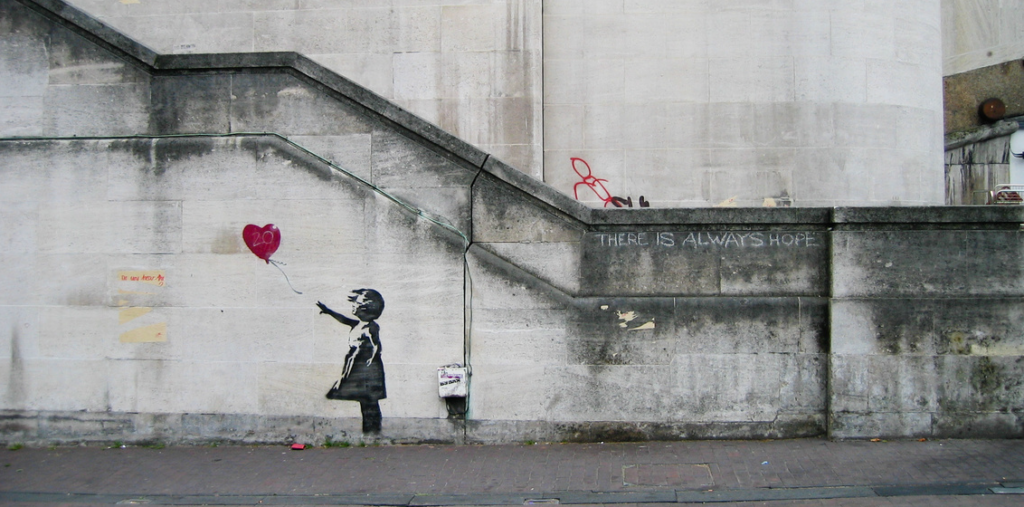
Un altro momento iconico è arrivato nel 2004 con “Girl with Balloon”, raffigurante una bambina che lascia volare via un palloncino a forma di cuore, diventato simbolo di speranza e fragilità.
L’opera ha guadagnato ulteriore notorietà nel 2018, quando una versione originale, appena battuta all’asta da Sotheby’s, è stata autodistrutta parzialmente dallo stesso Banksy, grazie a un meccanismo tagliente nascosto, un gesto provocatorio verso il mercato dell’arte.
Nel 2005, con la mostra “Crude Oils”, l’artista ha sorpreso ancora, esponendo dipinti a olio reinterpretati in chiave satirica in una galleria popolata da 200 ratti vivi.
Tra le opere, “Show Me the Monet”, una versione del celebre dipinto di Monet, arricchita di carrelli della spesa abbandonati, criticava la commercializzazione dell’arte e il degrado ambientale.
Durante la sua carriera, Banksy ha mantenuto e continua a mantenere un equilibrio tra arte di strada e critica sociale, sfidando costantemente l’establishment artistico e catturando l’attenzione del pubblico.
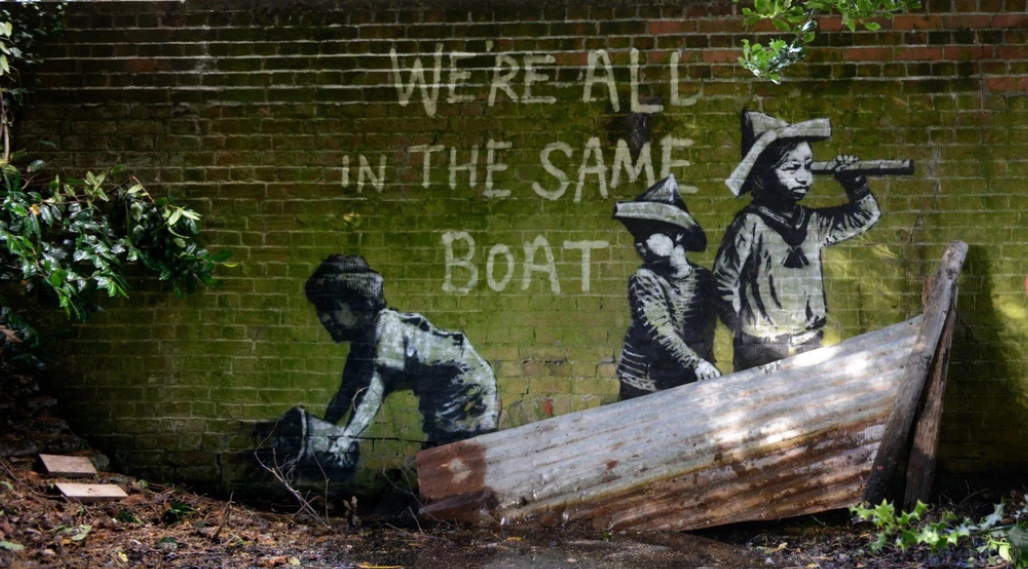
's provocative themes Banksy's work is characterized by incisive criticism of capitalism and hyper-consumerism. Through his creations, he denounces modern society's obsession with money and the possession of material goods as symbols of status and happiness.
A significant example is "Shop Until You Drop," featuring a woman falling while clinging to shopping bags, symbolizing the physical and moral downfall of consumers trapped in a system that promotes shopping as a source of happiness.
In works such as the London mural depicting a child sewing Union Jack flags, he denounces the gap between the economic elite and those who pay the price of inequality.
Furthermore, his critical gaze extends to child labor, highlighting the inhumane conditions in which luxury goods are often produced.
War and violence are other central themes in his work, with his commitment to the conflict in the Middle East being particularly relevant: the murals along the separation wall in the West Bank evoke images of freedom and hope in a context of oppression, suggesting a profound reflection on the physical and symbolic walls that divide people and fuel conflict.
Another recurring theme is the denunciation of mass surveillance and abuse of power by the state and corporations. An example of this is the work "One Nation Under CCTV," in which Banksy highlights the paradox of a society that incessantly monitors its citizens, eroding freedoms in the name of security.
The artist expresses his concern about the invasion of privacy and the manipulation of human behavior in a hyper-technological society.
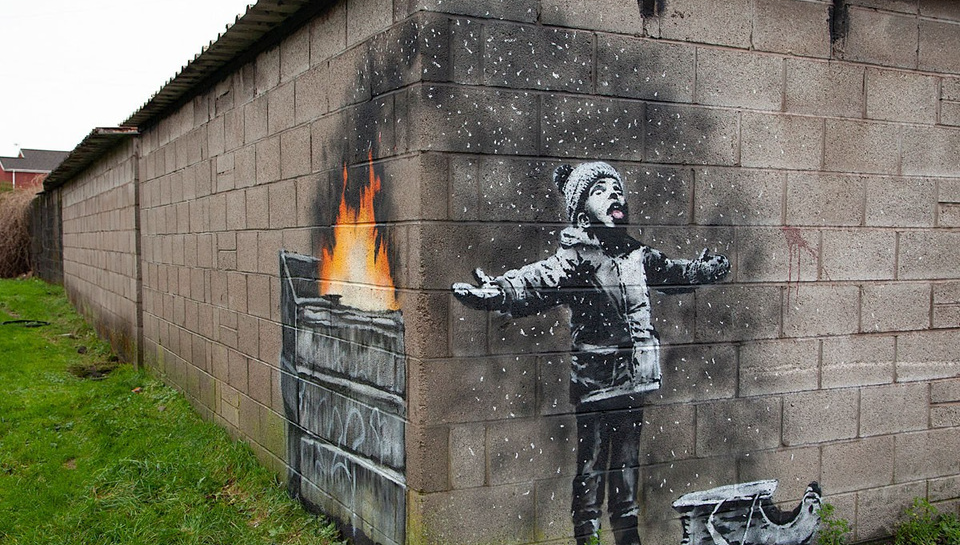
The environmental crisis is a theme addressed in the creation "Season's Greetings," in which a child watches "snow" falling, which turns out to be ash from a burning dumpster, an image that denounces environmental devastation masked by apparent normality.
The installation "Dismaland," which represents a dystopian version of an amusement park, addresses social inequality and apathy towards global tragedies, offering attractions that cruelly showcase human suffering and injustice.
Irony is Banksy's distinctive stylistic strategy, his black humor highlighting the absurdity of human situations, making complex topics such as war, politics, and the environmental crisis accessible.
Using popular symbols, Banksy creates a powerful contrast between the apparent innocence of the images and the profound messages they convey.
The free-roaming zoo in London
Starting on August 5, 2024, London was invaded by a series of enigmatic murals, all depicting animals, signed by the artist Banksy.
The first of these murals appeared near Kew Bridge, depicting a mountain goat precariously balanced on a wall, as if about to fall.
This first intervention immediately captured the public's attention, triggering a wave of speculation and interpretation.
However, Banksy has not provided any official explanation behind this work or the subsequent ones.
In the days that followed, other "free-roaming" animals appeared in different areas of London, including monkeys swinging on a bridge in Brick Lane, black silhouettes of elephants approaching with their trunks from two barricaded windows in Chelsea, and a rhinoceros balancing on a car in Charlton.
The city was thus transformed into a veritable "urban zoo," with each mural placed in strategic locations that stimulate both aesthetic and social reflection.
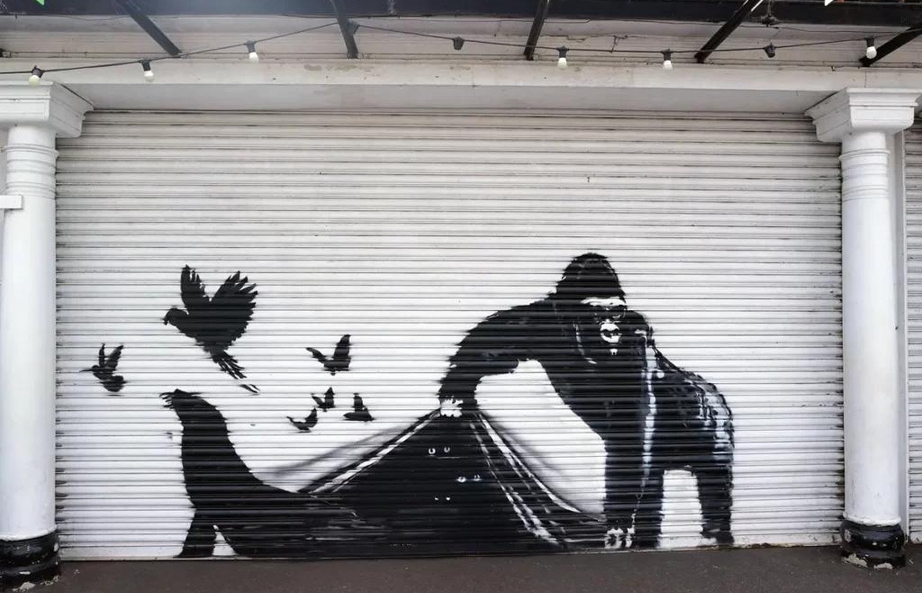
The series was then enriched with other animals such as a howling wolf in Peckham and a gorilla at London Zoo, which appears to be lifting the bars of the gate, as if to free the other animals from captivity.
Although some of these murals were vandalized or removed shortly after their appearance, as in the case of the rhinoceros and the wolf, the impact of the works was profound, leaving a lasting mark on the debate about public art and its meaning.
Interpretations of the messages behind this series have multiplied, translating them into a critique of contemporary society, comparing animals to the human condition in metropolises, while others have read them as an environmental message, a reflection on the destruction of natural habitats, or a critique of surveillance and control, as suggested by the presence of cameras in the ibex mural.
However, the lack of an official statement from Banksy has left every interpretation open, contributing to the mysterious and controversial appeal of this series, which ended at the end of August.
Banksy and the art market
The relationship between Banksy and the art market is fraught with contradictions and criticism of the very system that, paradoxically, continues to profit from his works.
Although the British artist has repeatedly expressed his contempt for the commercialization of his art, ironically stating, "I can't believe you idiots actually buy this shit," his works are sold for huge sums, often without his direct consent.
One of the most emblematic cases of this dynamic occurred in 2023, when a mural created in Lowestoft, part of his "spraycation" series, was removed from the wall of a shop and subsequently sold.
This gesture sparked outrage in the local community, which perceived the removal as an act of commodification, depriving the public of a work that had been created to be enjoyed by everyone.
The artist has always seen his art as a means of public and democratic expression, but the market seems determined to turn it into a private collector's item.
Despite this criticism, the commercial value of his works continues to skyrocket.
The record for the sale of a Banksy work was set in 2019, when the painting Devolved Parliament was auctioned for £9.9 million, signaling that, despite being at odds with his ideals, the art market cannot resist the appeal of his provocation and originality.
This tension between the artist's intention and the commercial fate of his works reflects a broader challenge in contemporary times: on the one hand, art as a tool for social criticism, and on the other, art as a precious commodity sought after by collectors and investors.
The irony of Banksy is that, despite his efforts to escape these dynamics, his creations continue to be the subject of economic speculation.
In conclusion, Banksy's art, with its mix of provocation, irony, and social criticism, continues to represent a unique and powerful voice in the contemporary landscape.
At Artistinct, we believe that his ability to use public space to express messages of disobedience and social reflection challenges artistic conventions and raises fundamental questions about capitalism, surveillance, and the environment.
Banksy remains an eloquent example of how art can challenge norms, influence public debate, and question power structures, while his identity and motivations remain shrouded in mystery, further enriching the appeal and relevance of his work.

Join in!
Comments