Introduction: A New Digital Renaissance
In an age where technology permeates every aspect of daily life, the art world has not been left behind. Art and design universities, from London to Milan, New York to Shanghai, are reinventing the very concept of creativity, blending tradition and innovation in a combination that seems almost like a new Renaissance. Today, art education goes beyond the classical techniques of painting and sculpture, embracing disciplines such as game design, digital art, and contemporary art practices, fueled by cutting-edge technological tools.
The New Educational Paradigm: Between Tradition and Innovation
University classrooms, once silent guardians of centuries-old techniques, are now bursting with new energy thanks to the integration of digital technologies and personalized teaching methods. Against this backdrop, the recent Didacta exhibition, held in Bari from October 16 to 18, 2024, provided an international showcase for the future of education. The event showed how education is moving towards a student-centered approach, thanks to highly personalized programs and the use of virtual assistants that provide real-time feedback, enabling tailored and flexible learning.
The focus is no longer solely on transferring traditional artistic techniques, but also on cultivating transferable skills: empathy, communication, and adaptability are combined with learning about emerging technologies, creating a perfect synergy between ancient knowledge and future innovations.
Innovation in Action: The Case of the Sabrewing Program
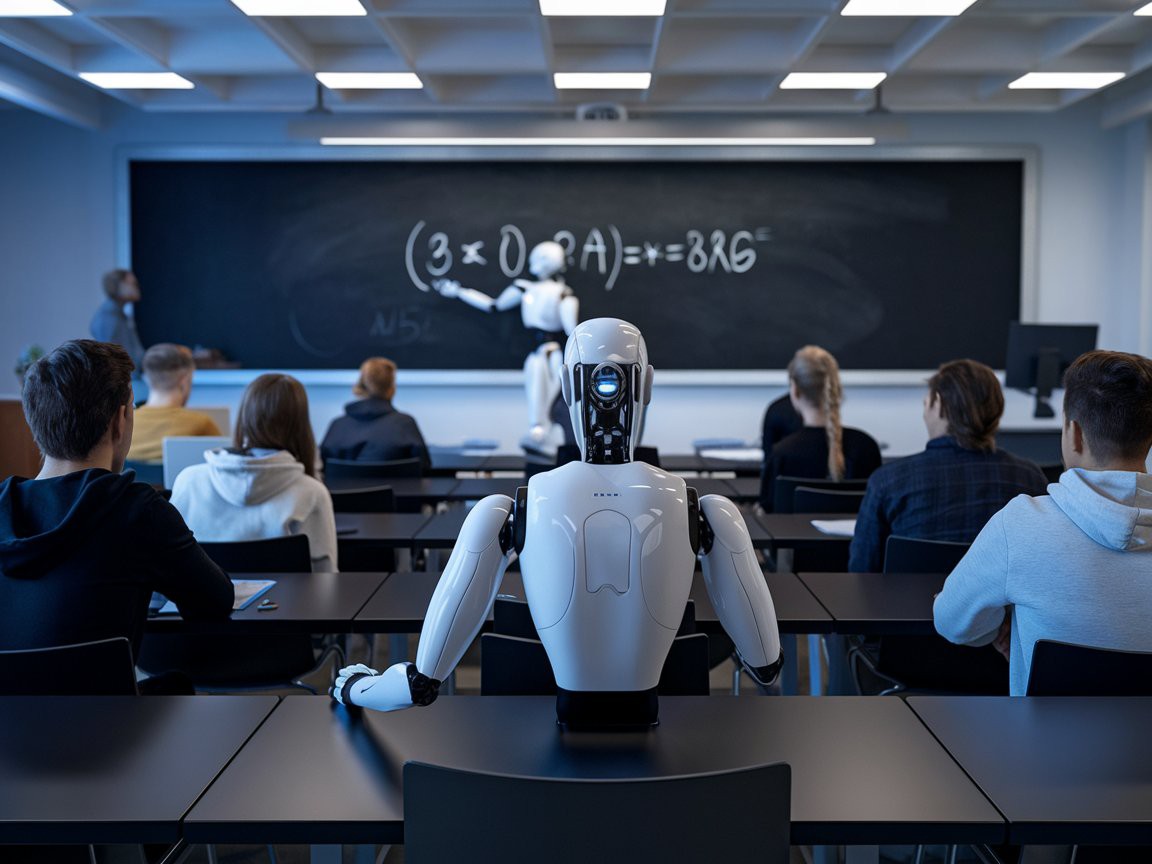
In London, an educational experiment is attracting international attention. David Game College launched the Sabrewing program on September 23, 2024, a bold initiative that involves the use of artificial intelligence as a teacher. Inspired by the agile and resilient hummingbird, the project, which involves a small class of 20 students, demonstrates how technology can be effectively integrated into arts education. Here, AI does not replace the human touch, but enriches it, offering support, guidance, and immediate feedback that allows students to evolve in their creative journey with speed and precision.
Global Excellence: A Map of Artistic Innovation
The QS World University Rankings Subject 2024 data confirms the presence of institutions of excellence that are redefining the boundaries of what is possible in art and design. These universities not only keep the values of artistic tradition alive, but also look toward a future in which technology and creativity are in constant dialogue.
Europe
- Royal College of Art (RCA) – London, United Kingdom
- University of the Arts London (UAL) – London, United Kingdom
- Politecnico di Milano – Milan, Italy
- Aalto University – Espoo, Finland
- Design Academy Eindhoven – Eindhoven, Netherlands
North America
- The New School (Parsons School of Design) – New York, USA
- Rhode Island School of Design (RISD) – Providence, USA
- Massachusetts Institute of Technology (MIT) – Cambridge, USA
- Pratt Institute – New York, USA
- School of the Art Institute of Chicago (SAIC) – Chicago, USA
South America
- National Autonomous University of Mexico (UNAM) – Mexico City, Mexico
- University of São Paulo (USP) – São Paulo, Brazil
- Pontifical Catholic University of Chile – Santiago, Chile
- University of Palermo (UP) – Buenos Aires, Argentina
- University of Buenos Aires (UBA) – Buenos Aires, Argentina
Asia
- Tongji University – Shanghai, China
- Central Academy of Fine Arts (CAFA) – Beijing, China
- The Hong Kong Polytechnic University – Hong Kong
- Tsinghua University – Beijing, China
- Nanyang Technological University (NTU Singapore) – Singapore
Oceania
- RMIT University – Melbourne, Australia
- University of Sydney – Sydney, Australia
- Monash University – Melbourne, Australia
- Queensland University of Technology (QUT) – Brisbane, Australia
- The University of Melbourne – Melbourne, Australia
Africa
- Helwan University – Egypt
On a continent where tradition intertwines with new aspirations, institutions such as the University of Cape Town (UCT) in South Africa are emerging as centers of excellence, despite their still marginal presence in international rankings.
Courses that Project the Future: Between Digitization and Experimentation
Universities of excellence are not content with merely imparting basic knowledge; they encourage students to explore new horizons with cutting-edge educational programs. Here are some of the courses that are becoming the benchmark for the new generation of artists and designers:
Design for Industry 5.0
University of the Arts London (United Kingdom)
This course encourages students to immerse themselves in the era of human-machine collaboration, where artificial intelligence and robotics are tools for creating innovative and sustainable solutions. A path that combines ethics, technology, and creativity to revolutionize the manufacturing and artistic sectors.
Digital Direction
Royal College of Art (London)
Designed to train leaders in digital communication, the course utilizes technologies such as virtual reality, augmented reality, and artificial intelligence. Students learn to manage complex multimedia projects, honing narrative and strategic skills that are essential for modern marketing and communication.
Media Art and Science
MIT Media Lab (USA)
Here, the line between science, art, and technology dissolves, allowing students to experiment with augmented reality, complex algorithms, and interactive projects. A creative laboratory where data and innovation are transformed into new forms of artistic expression.
Service Design
Politecnico di Milano (Italy)
With a user-centered approach, this course focuses on the design of innovative services. Students learn how to integrate design, technology, and strategy to transform abstract ideas into practical and functional solutions that can respond to the needs of a constantly evolving market.
Design for Data Visualization
University of the Arts London (United Kingdom)
In an era dominated by big data, knowing how to interpret and communicate complex information is essential. This course teaches you how to transform numbers and statistics into engaging visual experiences, combining design, statistics, and programming.
Virtual and Augmented Reality
University of Edinburgh (Scotland)
Immersive technologies are at the heart of this course. Students explore applications ranging from interactive art to entertainment and corporate training, experimenting with virtual and augmented reality to create unique experiences.
Creative Robotics
Aalto University (Finland)
A course that challenges traditional conventions by integrating robotics into the creative process. Students engage in the creation of interactive installations and artistic performances, exploring new frontiers in visual storytelling and sensory experience.
The Artistinct Ecosystem: A Catalyst for New Ideas
At the heart of this educational revolution lies the Artistinct ecosystem. This innovative platform acts as a bridge between the academic world and the real market, offering students and young artists not only visibility, but also concrete opportunities for collaboration and professional growth. Artistinct supports the belief that revolutionary ideas should be able to break out of the classroom and have a direct impact on the world of art and culture, facilitating the encounter between tradition and innovation.
Through partnerships with prestigious institutions and collaborations with industry professionals, Artistinct promotes constant and stimulating dialogue, encouraging the development of projects that embrace the entirety of the contemporary creative landscape. An environment in which every innovation, however bold, finds fertile ground to express itself and grow.
Conclusion: Toward a Future of Unlimited Creativity
The convergence of art, education, and technology marks the beginning of a new era in education, where creativity is enriched by innovation and tradition merges with digital technology to give rise to art 2.0. Universities around the world, with their cutting-edge programs, are charting a course that goes far beyond traditional classrooms, preparing the minds of the future to challenge and reinvent the world.
In this dynamic scenario, every lesson becomes an exciting journey, every project a laboratory for experimentation, and every innovation a fundamental piece in the construction of a new artistic paradigm. Art today is no longer confined to ancient techniques, but is constantly renewing itself, ready to embrace change, to dialogue with the digital world, and to transform every challenge into an opportunity for rebirth.
The era of Art 2.0 is here: an invitation to look beyond, to dare and to reinvent the future with passion, innovation, and a touch of magic. A future in which the boundaries between the possible and the impossible dissolve, leaving room for unlimited creativity, capable of shaping the world and redefining its boundaries.


Join in!
Comments