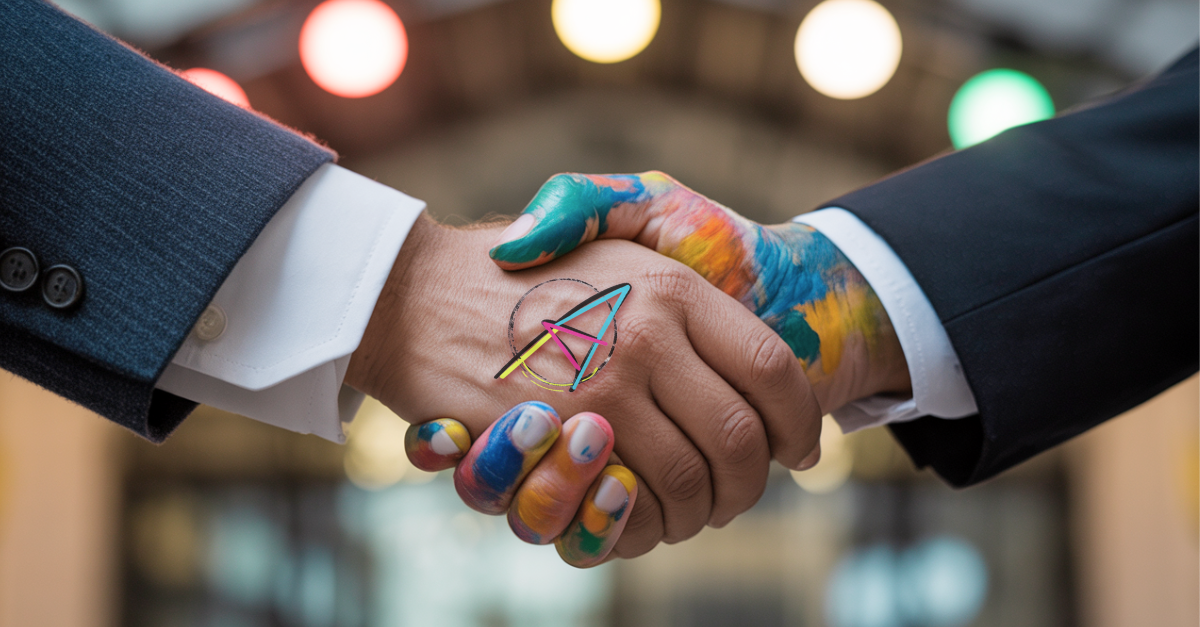
Try talking to a professional in the art world. Everything flows between beauty, vision, and cultural impact. Then say the word "investment" or "economic return." Suddenly, silence falls. Eyes drop.
In the art world, mixing art and money is still perceived as a betrayal. It is precisely this taboo that is stifling our cultural system. But if we really want to build a future for global culture, we must stop whispering: creative purity can no longer be immune to market contamination.
Foresight is not a luxury, but a right
During a recent conference in Milan, Daniele Fazio, Founder and CEO of Artistinct—the innovative ecosystem that connects every aspect and player in the art market—laid some important groundwork: foresight means believing in a project that may not have an immediate return, but which may pay off in the long term.
True cultural impact is never an instant result, but a process that takes time to develop fully. Some projects require years to reach maturity and generate the necessary resonance: a value that has the capacity to profoundly influence the identity and long-term development of a community or an entire generation.
Foresight is not a luxury we can afford not to have.
The Cost of Fiction
This separation between creativity and resources is a fiction that is costing us dearly. Without concrete resources such as structured investments, support strategies, and sustainability models, even the most daring visions remain on paper. Or, worse still, they end up remaining in the hands of those who can afford them.
But what does investing in art really mean?
We're not just talking about buying works. We're talking about:
- Supporting creative processes that take time.
- Funding spaces and ecosystems that create authentic connections.
- Believing in projects whose value will emerge in several years' time.
It means recognizing that culture is not an expense to be justified, but an economic driver capable of generating social transformation and concrete opportunities. The Artistinct project works precisely on this: building bridges between creators and investors.
The goal is to give continuity to a sector that can no longer depend on the passion of individuals, but requires collective infrastructure.
What if we stopped viewing cultural investment as a risk and started treating it as a broader opportunity? Culture globally needs vision, and vision needs support.
Tell me what you think:
In your sector, what is the first concrete step to overcome this taboo? Have you already seen virtuous examples of long-term cultural investment?
Join in!
Comments