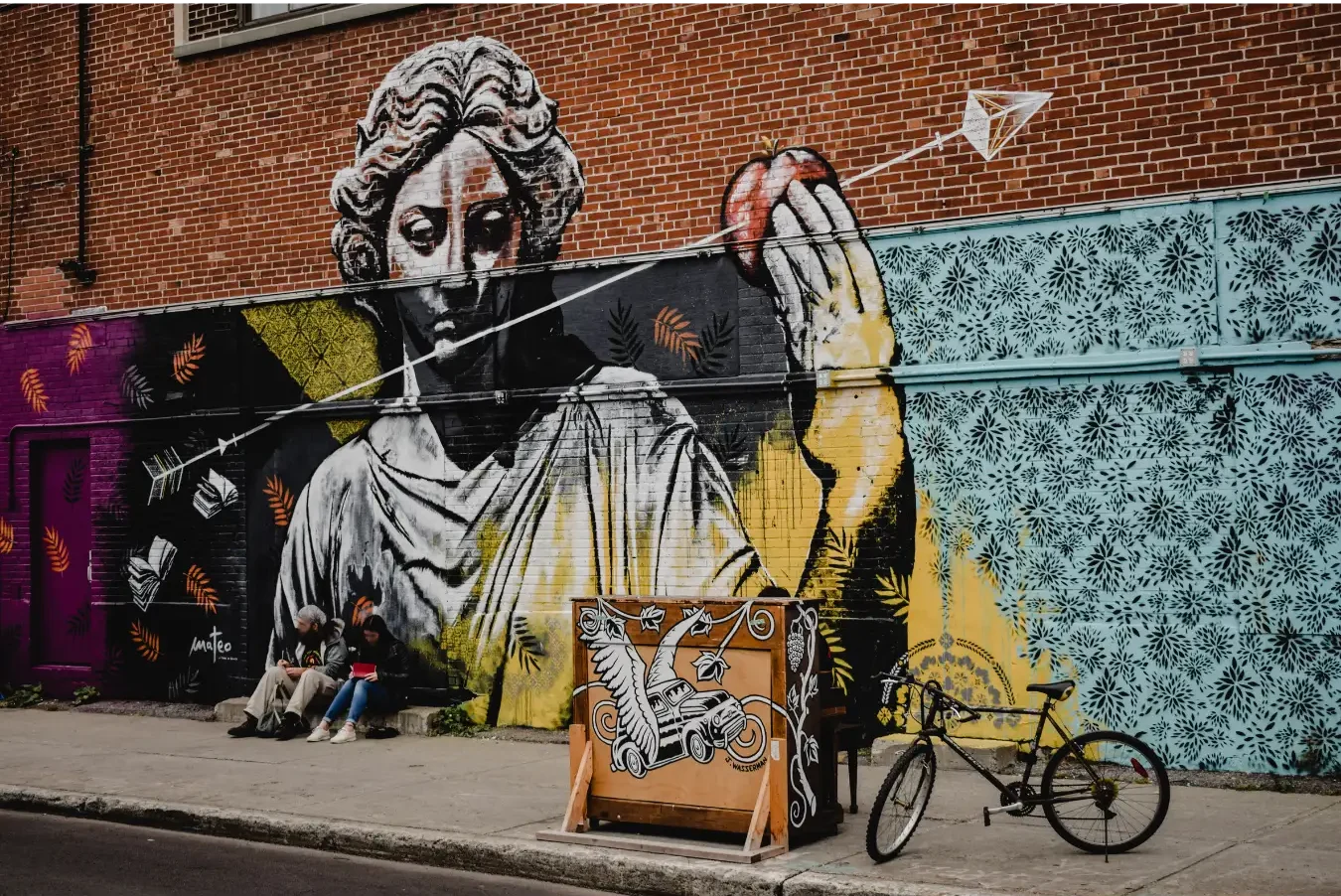
Collaborations between artists and brands have always represented a meeting point between creativity and commerce, but over the years they have evolved, transforming the artistic, cultural, and commercial landscape.
From simple commissions by powerful patrons to equal alliances that have shaped contemporary culture, the relationship between art and the market has undergone a significant change.
Collaborations represent a synergy in which art and businesses come together to create mutual added value, creating cultural icons that raise awareness in the community and strengthen the emotional bond between the public and the brand.
Artists express their vision through their style, creativity, and emotions, personalizing and transforming their creations into symbols that tell a story or convey a meaningful message.
Companies, drawing on their own values and the artist's abilities, strengthen their identity by attracting an audience interested in their expression and vision.
Collaborations can be created in various ways, from limited editions of products to fashion collections, advertising campaigns, and art installations.
From the beginning...
The first collaborations between art and power date back to ancient times, when artists were supported by noble or religious patrons to celebrate their prestige through monumental works.
During the Renaissance, this dynamic reached its peak with families such as the Medici, who not only financed art but also helped define its aesthetic canons.
In that context, art was a tool for consolidating power and affirming social status, and artists were seen as instruments for realizing those ambitions.
Modern evolution
With the advent of modernity and the industrial revolution, the link between art and commerce changed radically.
The expansion of markets and the emergence of the first large companies led art to engage in dialogue with growing consumerism.
Artists such as Toulouse-Lautrec were masters of this new phase, creating advertising posters that combined commercial needs with refined aesthetics.
In the 20th century, with Pop Art and figures such as Andy Warhol, collaborations between art and brands reached a new dimension.
The contemporary world
Today, collaborations between artists and brands have become a widespread and sophisticated phenomenon.
It is no longer just a matter of commissioning works, but of creating unique experiences that blend tradition and innovation, artistic vision and commercial strategy.
Contemporary artists are no longer mere executors, but creative partners who actively contribute to defining the brand's identity.
The limited editions, fashion collections, and advertising campaigns born from these collaborations not only enhance the product, but also amplify its symbolic value, transforming it into a cult object and strengthening the brand's positioning in the global market.
Today we will talk about the most iconic collaborations between artists and brands that have marked a turning point and inspire the global art and commercial market!
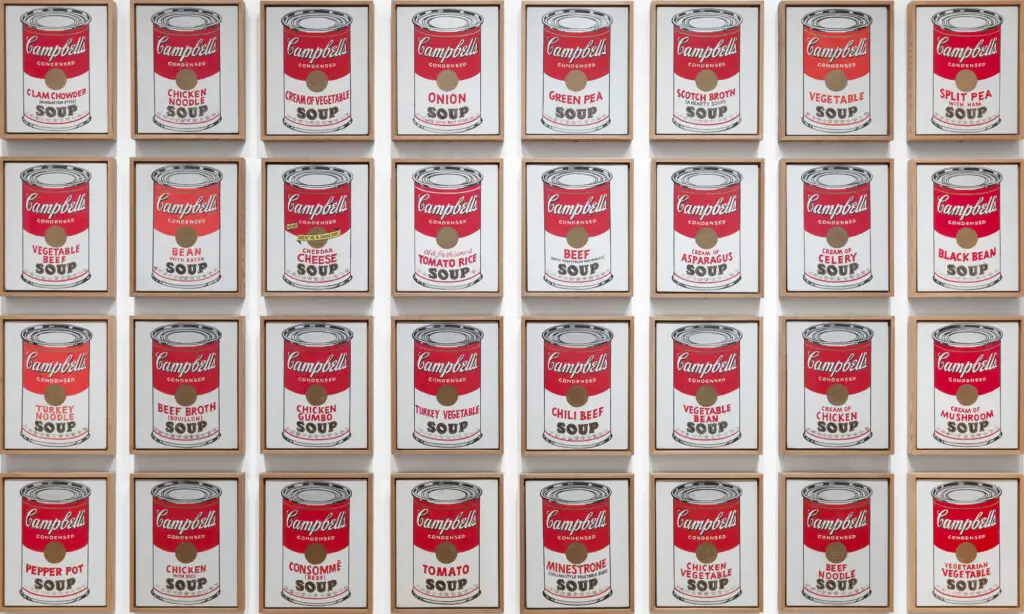
Andy Warhol & Campbell’s Soup
Andy Warhol, born in Pittsburgh in 1928, was one of the most influential artists of the 20th century and a central figure in the Pop Art movement.
He began his career as a commercial illustrator in New York, where he developed a unique aesthetic based on repetition and mass production.
With his distinctive style, Warhol explored the relationship between artistic expression, popular culture, and consumerism, transforming everyday objects into iconic symbols.
His studio, The Factory (Midtown Manhattan), became a crucial meeting place for artists and celebrities, reflecting his interest in mass culture and consumerism.
In 1962, Warhol revolutionized a common consumer product, Campbell's soup, into a Pop Art icon with his series of silkscreen prints "Campbell's Soup Cans."
The artist used the repetition of the cans to evoke the mass production of the 1960s, making art accessible and recognizable to everyone.
This seemingly simple gesture had a revolutionary impact on the art world, as it elevated an ordinary consumer product to a cultural symbol, challenging traditional notions of beauty and artistic value.
Warhol demolished the distinction between high and low art, celebrating the mundane and the commercial as worthy of artistic representation.
The impact of "Campbell's Soup Cans" was immediate and lasting, ushering in a new era in which art could be found everywhere, even on supermarket shelves.
This vision profoundly influenced the next generation of artists and changed the way art interacts with society, making Warhol a key figure in the definition of art.
Keith Haring & Absolut Vodka
Keith Haring, born in Pennsylvania in 1958 and raised in New York, was a world-renowned artist and graffiti artist, known for his distinctive style and social activism.
Haring gained notoriety in the 1980s with his works characterized by simple lines, bright colors, and stylized figures.
His creations addressed social and political issues, such as the fight against AIDS and civil rights, using art as a tool for change and social commentary.
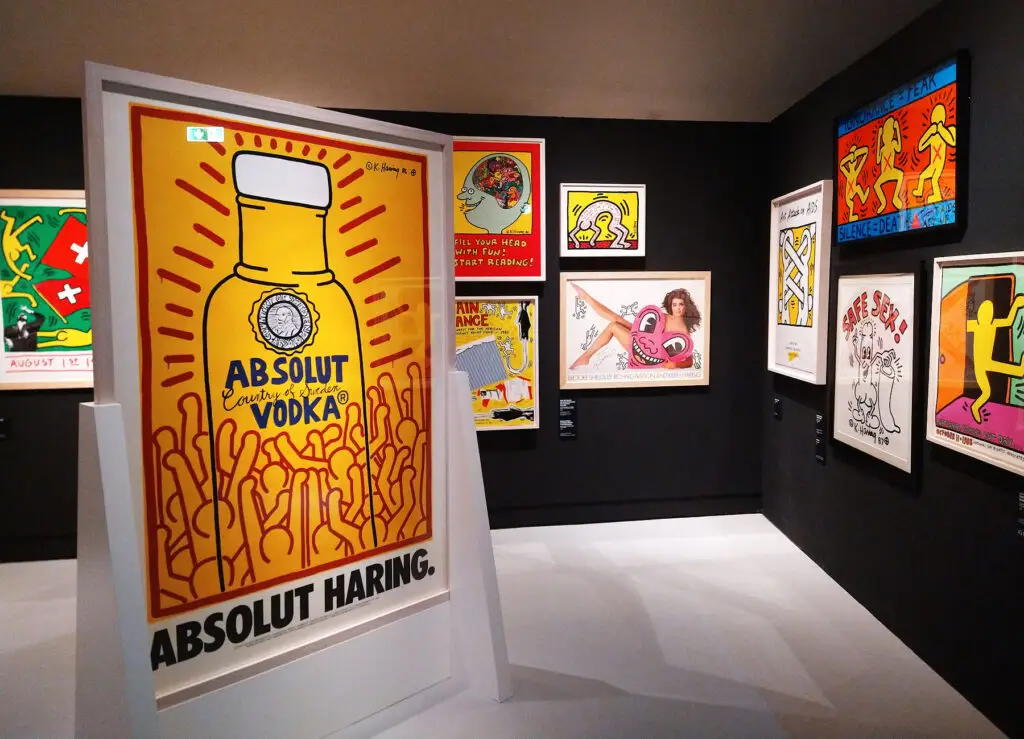
On the advice of Andy Warhol in 1986, The Absolut Company AB (producer of Absolut Vodka) collaborated with Haring to create four monumental paintings.
The paintings were subsequently transferred onto a large yellow canvas and are now part of the Absolut Art Collection.
The works reinterpret the vodka bottle logo in the artist's iconic style.
The paintings, featuring stylized red figures and drawn in Haring's distinctive style, represent a fusion of art and advertising.
The figures interact with the large bottle logo at the bottom of the paintings, elevating the brand to a visually appealing level.
The collaboration between Haring and Absolut Vodka had a profound impact on both the art world and the commercial sector, creating an aesthetically sophisticated interaction.
Haring's paintings enhanced the product and, above all, amplified Absolut Vodka's global visibility, making it stand out as an innovative brand.
The partnership marked a milestone in the way companies began to see art as a means of enriching and differentiating their brands, setting a new standard for collaborations between artists and businesses and thus influencing the marketing and advertising landscape.
Piet Mondrian & Yves Saint Laurent
Piet Mondrian, born in 1872 in Amersfoort, was a master of abstract art who developed his distinctive style, Neoplasticism, in the 20th century.
This style was characterized by the rigorous use of perpendicular black lines and primary colors on white backgrounds.
Mondrian lived in Paris and New York, where he profoundly influenced the modern art movement with his geometric approach and philosophical vision that reduced art to the essential and universal.
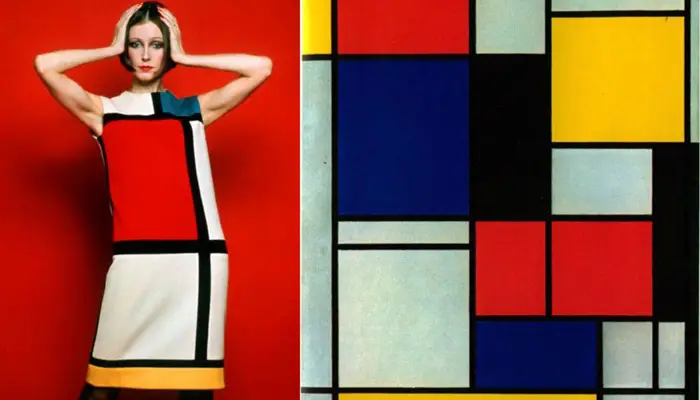
In 1965, Yves Saint Laurent created one of his most iconic designs in collaboration with the artist: the "Mondrian Dress," a dress that combined fashion and art in an iconic way.
Inspired by Mondrian's paintings, the dress represents a perfect fusion of abstract art aesthetics and high fashion.
The dress was designed with a bold, geometric design, featuring blocks of red, blue, and yellow separated by thick, defined black lines.
The dress was presented in the fall-winter collection of 1965 and immediately captured attention for its innovative style.
The impact of the collaboration was considerable, with the "Mondrian Dress" not only cementing Yves Saint Laurent's reputation but also broadening the perception of the role of art in popular culture.
Today, the "Mondrian Dress" is considered not only a fashion masterpiece but also an enduring symbol of the integration of art and design, testifying to the continuing influence and power of art in the world of fashion.
Jonathan Ive & Apple
Sir Jonathan Ive, better known as Jony Ive, is a world-renowned British designer whose influence has left an indelible mark on the technology industry.
Born in London in 1967, he began his career at Apple in 1992, embarking on a journey that revolutionized technology design.
Among Jony Ive's most significant contributions to Apple is the iMac G3, introduced in 1998.
Q
This computer represented a turning point in the aesthetics of computer devices, abandoning traditional gray and anonymous designs in favor of a radically new approach: a colorful, translucent shell that allowed part of the internal components to be seen.
In 2001, Ive continued to innovate with the design of the iPod.
His minimalist approach and the famous click wheel made the iPod an object that redefined the way people listen to music and, at the same time, consolidated Apple's position as a leader in consumer electronics.
The iPhone, launched in 2007, was Ive's most revolutionary contribution.
C
With a design that almost completely eliminated physical buttons in favor of a large touch screen and a simplified user interface, the iPhone became a true technological icon.
In addition to hardware, Ive also influenced the design of Apple software.
The redesign of iOS 7, which introduced a flat, modern visual interface, was a bold move that aligned the software's appearance with the principles of simplicity and clarity that characterized his hardware designs.
In 2019, Ive left Apple to found his own design company, LoveFrom, while continuing to collaborate with Apple on various projects.
The impact of his collaboration with Apple has been profoundly revolutionary for the technology industry, and with his vision, he has defined the brand's aesthetic and inspired designers and companies to blend technology with beauty.

Jeff Koons & BMW
Jeff Koons, born in 1955 in York, is a world-renowned contemporary artist known for his sculptures and installations that explore mass culture and consumerism.
Koons gained fame for his works that transform everyday objects into symbols of art, using industrial production techniques to enhance the aesthetic and cultural value of these objects.
His style is characterized by bright colors, reflective surfaces, and an approach that challenges traditional art conventions.
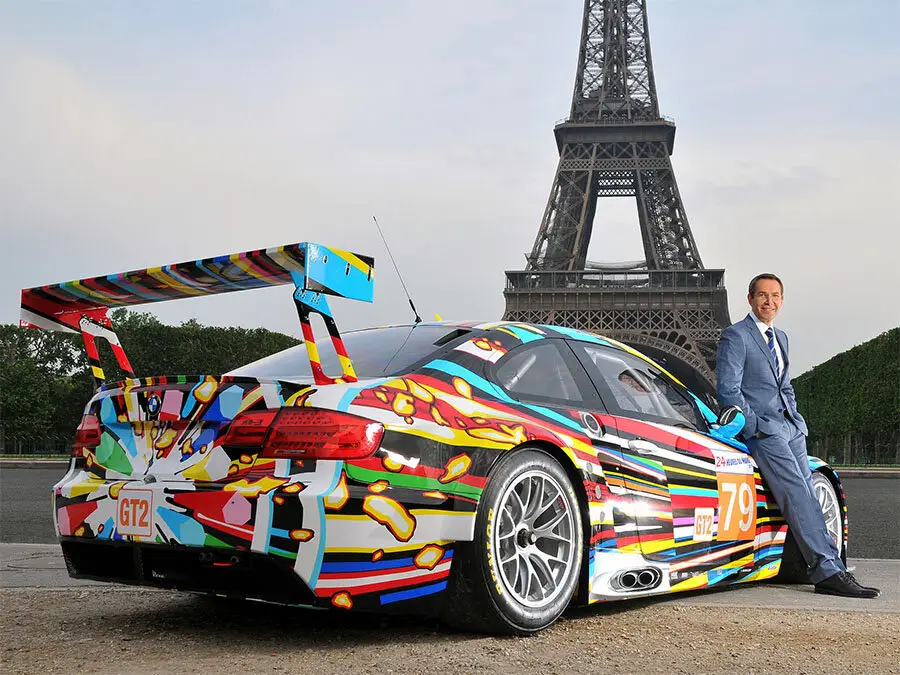
In 2010, Koons collaborated with BMW to create the German automaker's 17th Art Car.
This collaboration resulted in the BMW M3 GT2, a race car that made its debut at the Pompidou Center in Paris.
Koons' design transformed the M3 GT2 into a work of art on four wheels, with an exterior livery featuring an explosion of colors and dynamic shapes that reflect Koons' artistic vision.
The car's silver-clad interior completed the aesthetic with a touch of elegance and modernity.
Koons' BMW M3 GT2 raced in the legendary 24 Hours of Le Mans, a prestigious event that saw the car not only on the track but also in the spotlight of a global audience.
The partnership had a positive and significant impact on both sectors, demonstrating that art has the power to transcend traditional boundaries and influence different sectors, consolidating the role of contemporary art as an innovative and dynamic force on the global scene.
Takashi Murakami & Uniqlo
Takashi Murakami, born in Tokyo, is a contemporary artist known for blending Japanese artistic tradition with modern pop culture.
Murakami studied traditional Japanese Nihonga painting and quickly developed a unique style he dubbed "Superflat."
This artistic movement blended the aesthetics of traditional Japanese painting with contemporary pop iconography, creating works ranging from enormous sculptures to vibrant and colorful paintings.
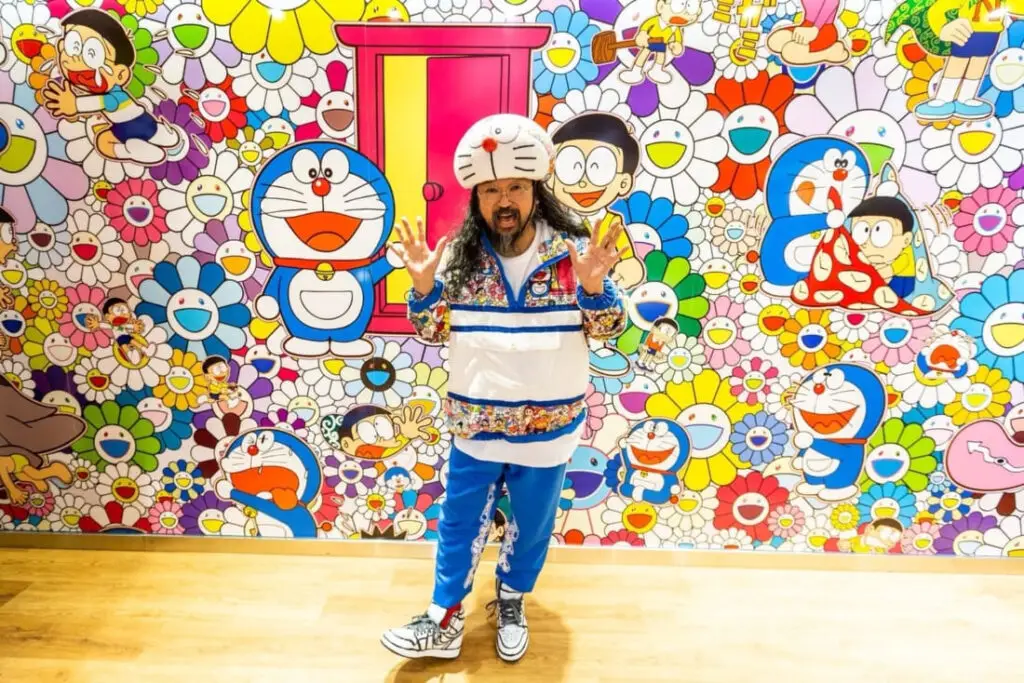
In 2018, Murakami collaborated with UNIQLO EUROPE LTD, a leading Japanese fashion company, to launch a nostalgic collection that combined the master's art
with the charm of the famous futuristic cat Doraemon.
This collaboration resulted in a series of T-shirts and gadgets that stood out for their explosive colors and innovative designs, offering a combination of creativity and pop culture.
Murakami reinterpreted Doraemon with his characteristic colorful and psychedelic style, transforming simple garments into true vibrant and artistic icons.
The collection attracted fans of Murakami and Doraemon, but also a wider audience who saw these garments as a way to express their love for Japanese art and pop culture.
In conclusion, collaborations between Andy Warhol and Campbell's Soup, Keith Haring and Absolut Vodka, Piet Mondrian and Yves Saint Laurent, Jonathan Ive and Apple, and Takashi Murakami and Uniqlo demonstrate the power of art to teach, affirm, and convey values and concepts of meaning.
These projects not only bring together seemingly distant worlds, but also enrich our daily lives, transforming routine elements into powerful symbols of creativity and innovation.
The synergies between art and brands offer a unique perspective on art's ability to influence and reflect trends in contemporary society.
By integrating art into everyday life, these partnerships celebrate the beauty and genius of artists and bring the public closer to a deeper and more meaningful aesthetic experience.
At Artistinct, we firmly believe in the transformative and impactful power of art; we are convinced that alliances between artists and brands are fundamental to the creation of symbolic value and the evolution of global visual culture.
We admire partnerships not only for their aesthetic contribution, but for their ability to stimulate dialogue and inspire positive change in the world.
#webelieveinhumanartistinct

Join in!
Comments